A minimum viable product (MVP) is the simplest working version of your product that real people can use, built to find out whether they want it before you spend big. In 2027, a founder with no technical background can get one built in weeks, not years, for a fraction of the cost of a full product and this guide explains every step in plain English.
In this guide#
- What is an MVP?
- Why build an MVP before the full product?
- Famous MVP examples
- MVP vs prototype vs proof of concept
- Types of MVP
- How to build an MVP, step by step
- What to include (and leave out)
- How much does an MVP cost in 2027?
- How long does it take to build an MVP?
- 8 common MVP mistakes
- AI app builder or a team?
- How SprintCode Labs builds MVPs
- Frequently asked questions
What is an MVP?#
An MVP, short for minimum viable product, is the smallest version of a product that solves one real problem for real users. It is not a rough draft or a broken demo. It is a deliberately small, working product that you put in front of actual customers so you can learn from what they do.
The term was popularised by Eric Ries in the Lean Startup approach. In his framing, an MVP is the version of a product that gathers "the maximum amount of validated learning about customers with the least effort".
A simple analogy#
Imagine you want to open a restaurant with a 40-item menu. Instead of renting a big space and hiring a full kitchen, you cook one signature dish and sell it from a stall for a weekend. You quickly learn whether people queue for it, what they would pay and what they wish was different. That stall is your MVP. The full restaurant comes later and it is shaped by what you learned.
What "minimum" and "viable" actually mean#
- Minimum means only the features needed to test your main idea. Everything else waits.
- Viable means it genuinely works and delivers value. A person can use it to get something done and they would notice if it disappeared.
Both words matter. If it is not minimal, you spend months and money before learning anything. If it is not viable, people can't use it, so you learn nothing useful.
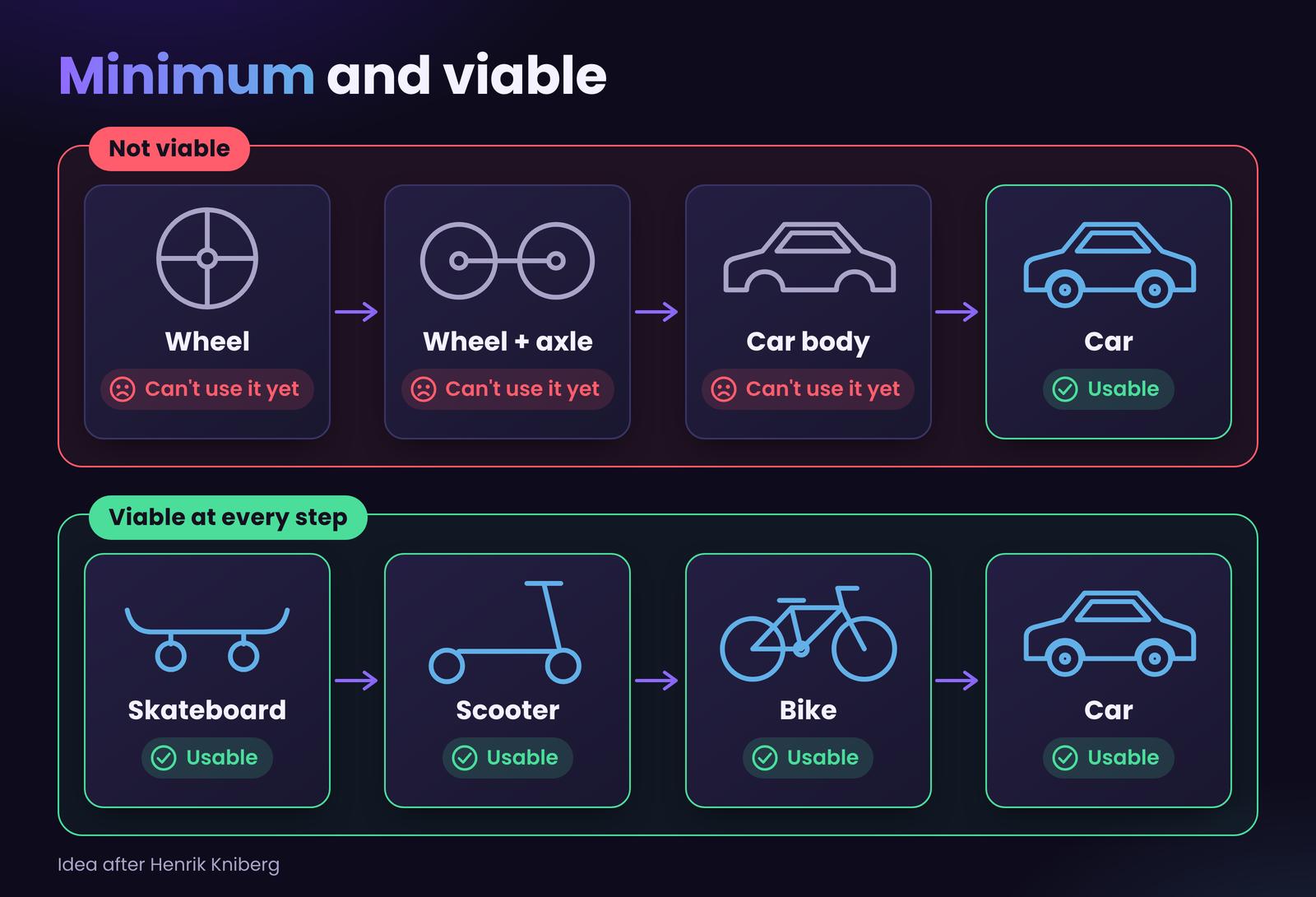
An MVP is a way to learn, not just a smaller product#
The most important thing to understand is that an MVP exists to answer a question. Typical questions are: Will people use this? Will they pay for it? Does this one feature solve their problem? Founders often confuse an MVP with a minimum feature list. They spend months building five features when one would have been enough to test the market.
Why build an MVP before the full product?#
Building an MVP first protects your money and your time, because it tests demand before you commit to a big build. CB Insights' research on startup post-mortems has named a lack of market need among the most-cited reasons startups fail, alongside running out of cash. The two are linked, because the cash often runs out when too few people want what was built.
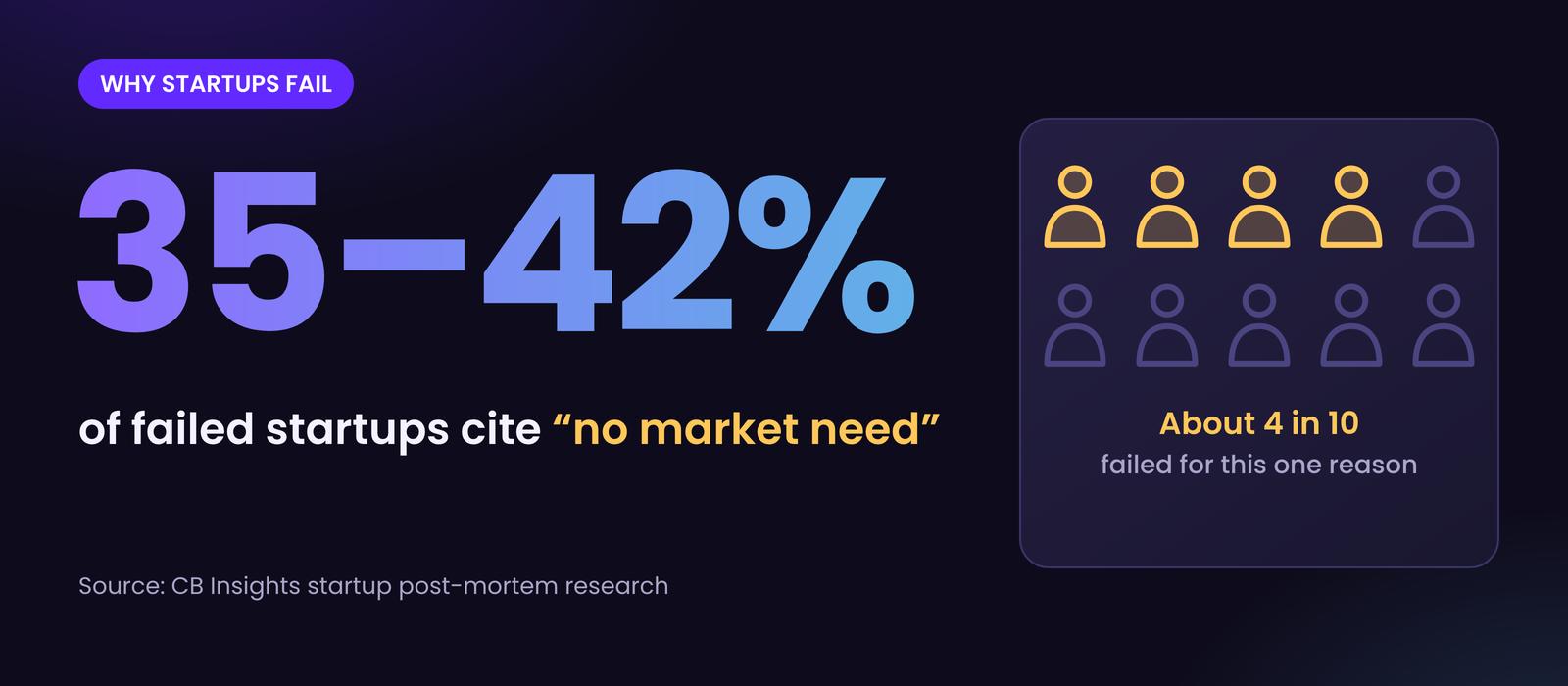
Here is what an MVP gives you:
- Lower risk. You spend a small amount to learn whether the idea works, instead of a large amount to find out too late.
- Faster time to market. A small product ships sooner, so you start learning sooner.
- Real feedback. You see what people do, not just what they say in surveys.
- Better decisions. Every future feature is chosen from evidence, not guesses.
- Proof for investors and partners. Early users or revenue are stronger evidence than a slide deck.
- A foundation to build on. A well-built MVP becomes version one of the real product, rather than being thrown away.
Famous MVP examples (and what each one tested)#
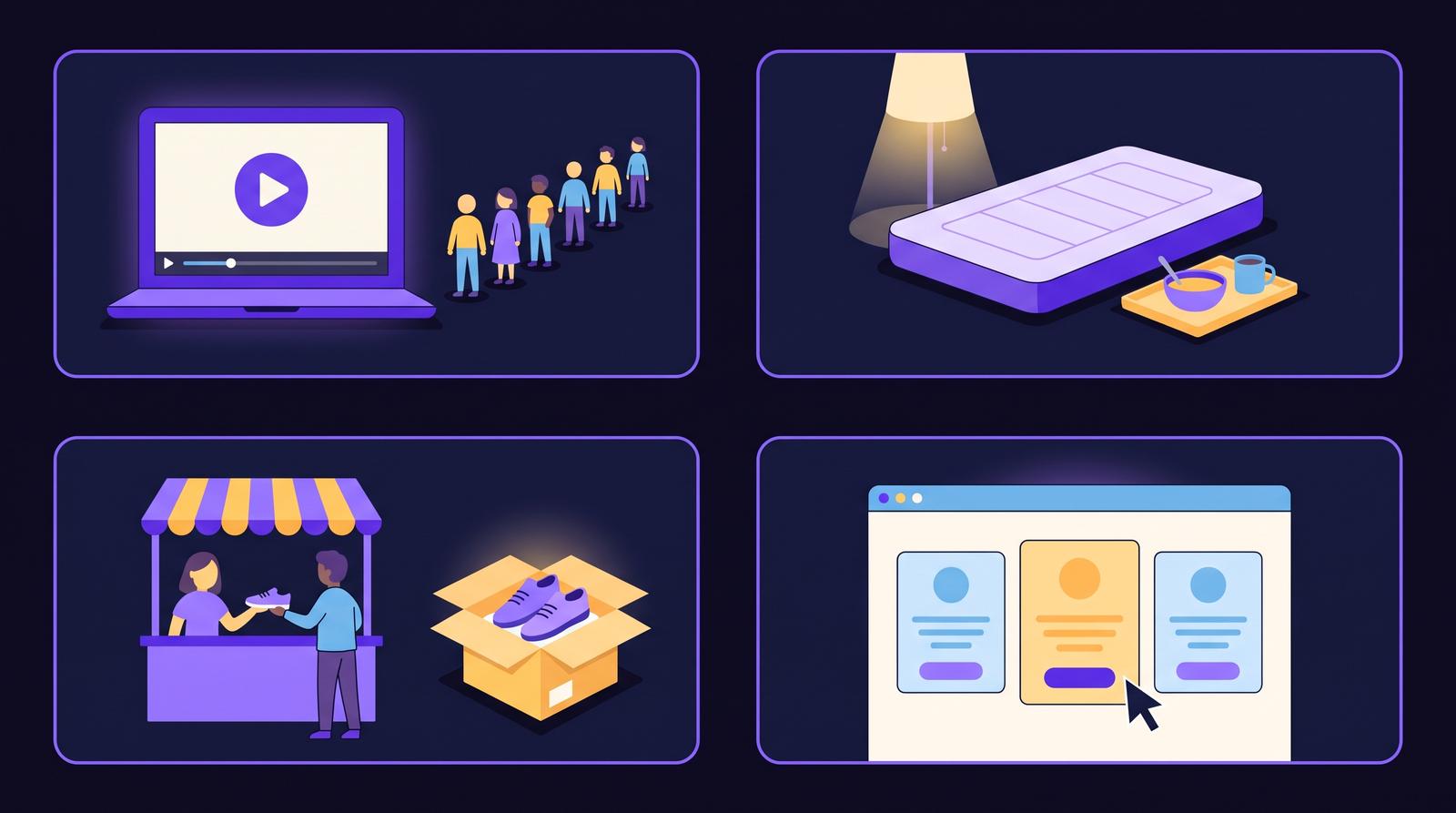
Many household-name companies began with an MVP that looked almost embarrassingly simple. What they share is that each one tested a single risky assumption cheaply.
| Company | The MVP | The question it answered |
|---|---|---|
| Dropbox | A roughly three-minute demo video of the product, made before it was fully built | Do people want file syncing enough to join a waiting list? |
| Airbnb | A simple website offering air mattresses and breakfast in the founders' own apartment | Will strangers pay to stay in someone's home? |
| Zappos | A basic site listing shoes from local stores, with the founder buying and shipping them only after an order | Will people buy shoes online without trying them on? |
| Buffer | A simple site explaining the idea, followed by a pricing page, before the real product existed | Will people click and will they accept the price? |
What the Dropbox example teaches#
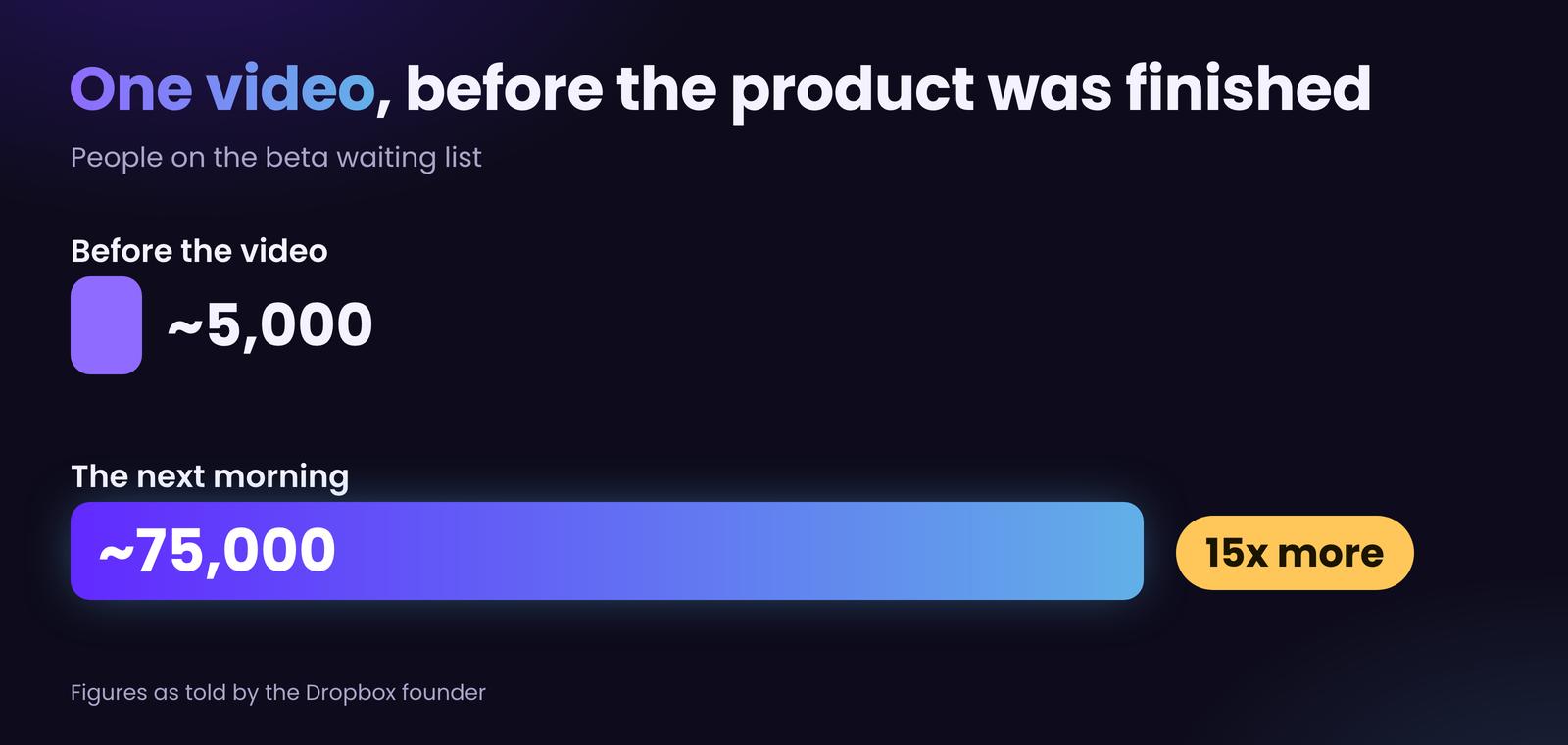
The Dropbox founder has said the video took the beta waiting list from about 5,000 people to about 75,000 overnight. That was proof of demand before the complicated technology was finished. You do not always need software to test a software idea.
The lesson for your idea#
None of these founders started by building everything. They started by finding the fastest, cheapest way to learn whether people cared. Your MVP might be a landing page, a manual service or a single working feature. The right choice depends on what you most need to find out.
MVP vs prototype vs proof of concept: what is the difference?#
These three terms are often mixed up, but each answers a different question. A proof of concept asks "can this be built?", a prototype asks "will people find this usable?" and an MVP asks "will people actually use and pay for this?"
| Proof of concept (PoC) | Prototype | MVP | |
|---|---|---|---|
| Main question | Is it technically possible? | Does the design make sense to users? | Do real people want and use it? |
| Is it a working product? | Not necessarily | No, usually a clickable mock-up | Yes, it works for real users |
| Who sees it | Mostly your own team | Testers and stakeholders | Real early customers |
| Typical time | Days to two weeks | Days to a few weeks | Weeks |
| Best used when | You are unsure the technology can work | You need to test the look and flow | You want to test real demand |
The usual order is proof of concept, then prototype, then MVP, though many ideas skip the first one because the technology is already well understood. If you are not sure which you need, tell us your idea and we will say honestly which one fits.
Types of MVP: you don't always need to write code#
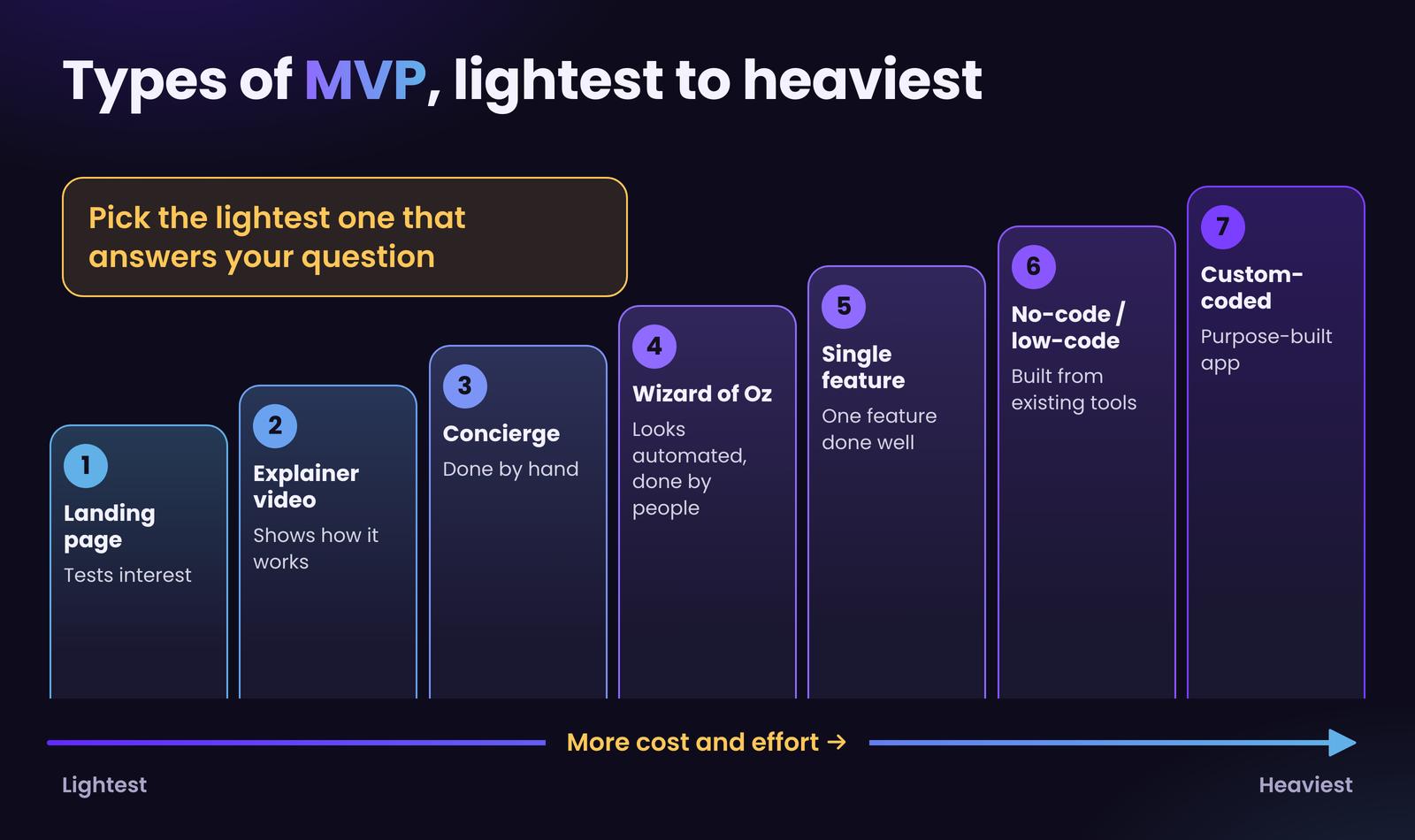
There are several kinds of MVP and the cheapest one that answers your question is usually the best. Here are the most common, from lightest to heaviest.
1. Landing page MVP#
A single web page explaining your idea with a "join the waiting list" or "buy now" button. It tests whether people are interested enough to leave their email or pay a deposit.
2. Explainer video MVP#
A short video showing how the product would work, as Dropbox did. It suits ideas that are hard to explain in words.
3. Concierge MVP#
You deliver the service by hand to a few customers, with no software behind it. It teaches you what customers truly need before you automate anything.
4. Wizard of Oz MVP#
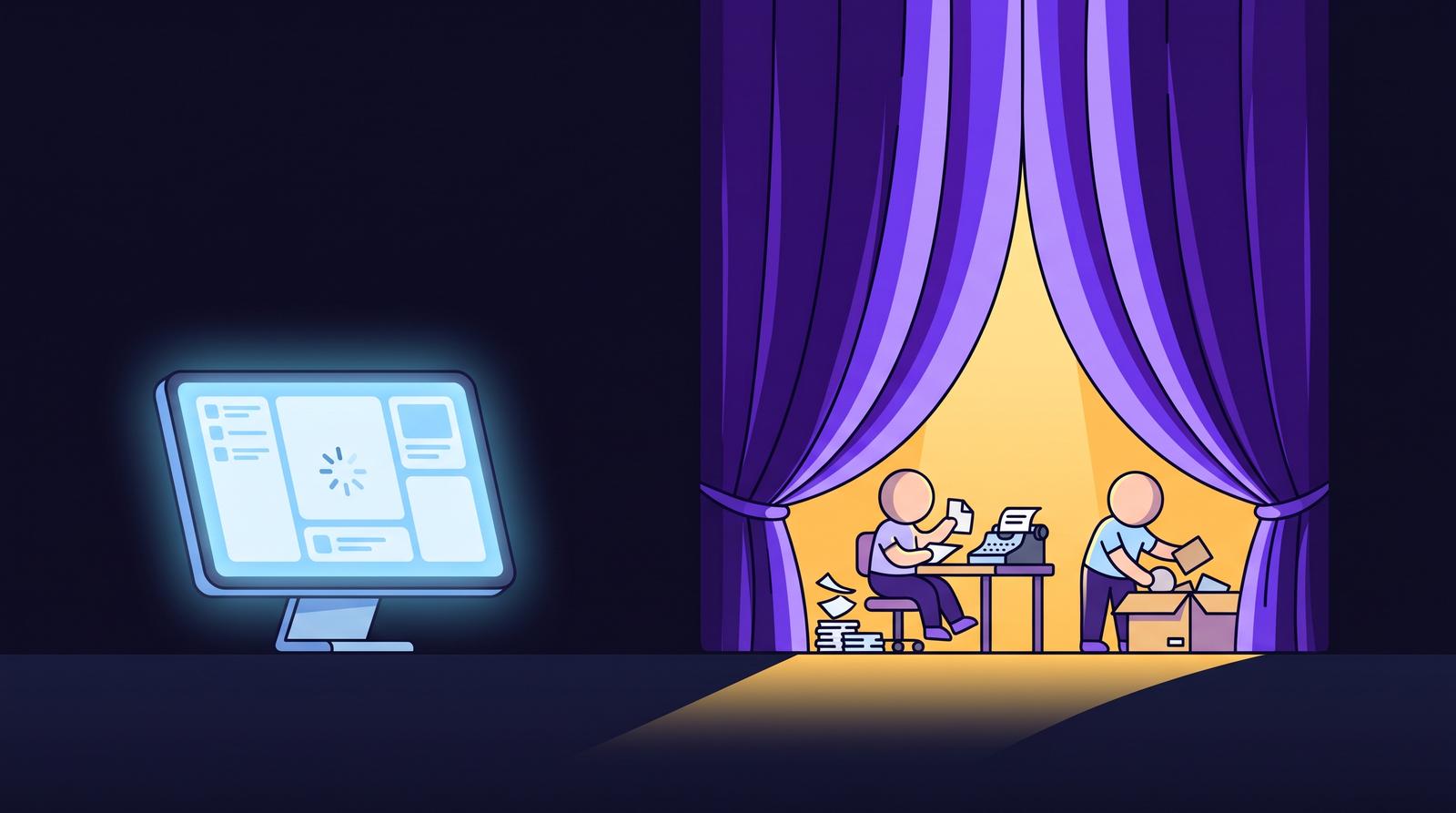
The product looks automated to the customer, but people are doing the work behind the scenes. Zappos-style fulfilment is a classic example.
5. Single-feature MVP#
You build one core feature, done well and nothing else. It suits ideas where one interaction carries all the value.
6. Low-code or no-code MVP development#
You assemble a working product from existing tools and AI app builders. It is quick and cheap and good for early tests, but it can hit limits on security, scale and customisation.
7. Custom-coded MVP#
A purpose-built web or mobile app. It costs more than the options above, but it is the right choice when your product has complex logic, special integrations or needs to be a solid base for growth.
A smart sequence is often cheap validation first, custom build second. You do not have to jump straight to the heaviest option.
How to build an MVP, step by step#
You can build an MVP in seven steps and none of them require you to understand code. The work that matters most happens before any software is written.
- Define the problem and the person. Write down, in one or two sentences, who has the problem and what it costs them in time, money or frustration. If you can't describe the person clearly, talk to ten of them before you go further.
- Check that the problem is real. Talk to potential customers and look at how they solve it today. Ask about their past behaviour ("What did you do last time this happened?") rather than asking if they would use your idea. People are polite about ideas and honest about their habits.
- Write down your riskiest assumption. Every idea rests on a belief that, if wrong, sinks it. Examples: "People will pay for this" or "Customers will upload their own data." Your MVP exists to test that one belief.
- Choose the smallest MVP type that tests it. Use the list above. If a landing page can answer your question, you do not need an app yet.
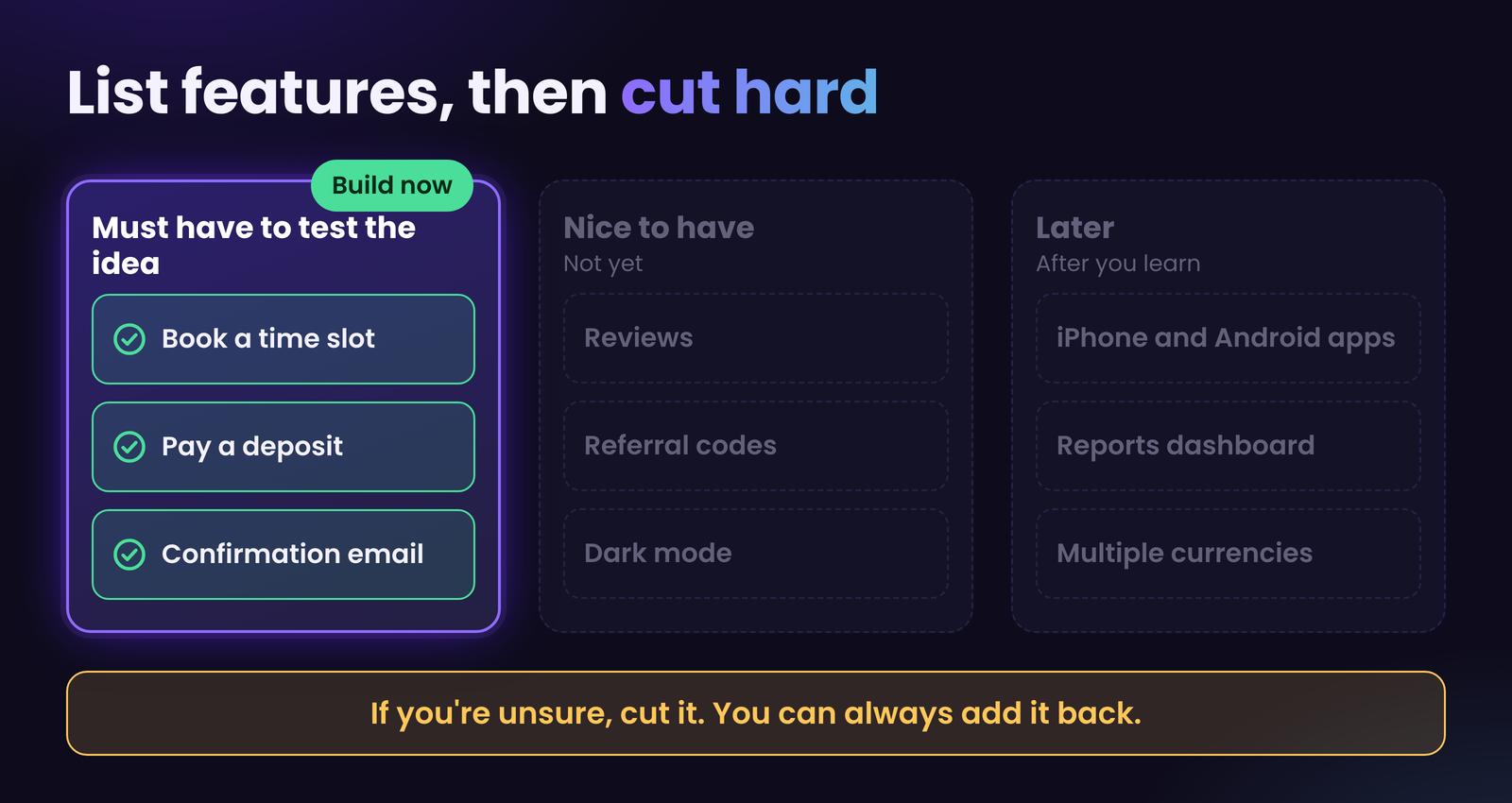
- List features, then cut hard. Sort every feature into "must have to test the idea", "nice to have" and "later". Build only the first group. If you are unsure, cut it. You can always add it back.
- Build it with the right team. Pick a technical partner who thinks about your business, not just code. Ask them what they would build first and what they would leave out. Their answers tell you a lot.
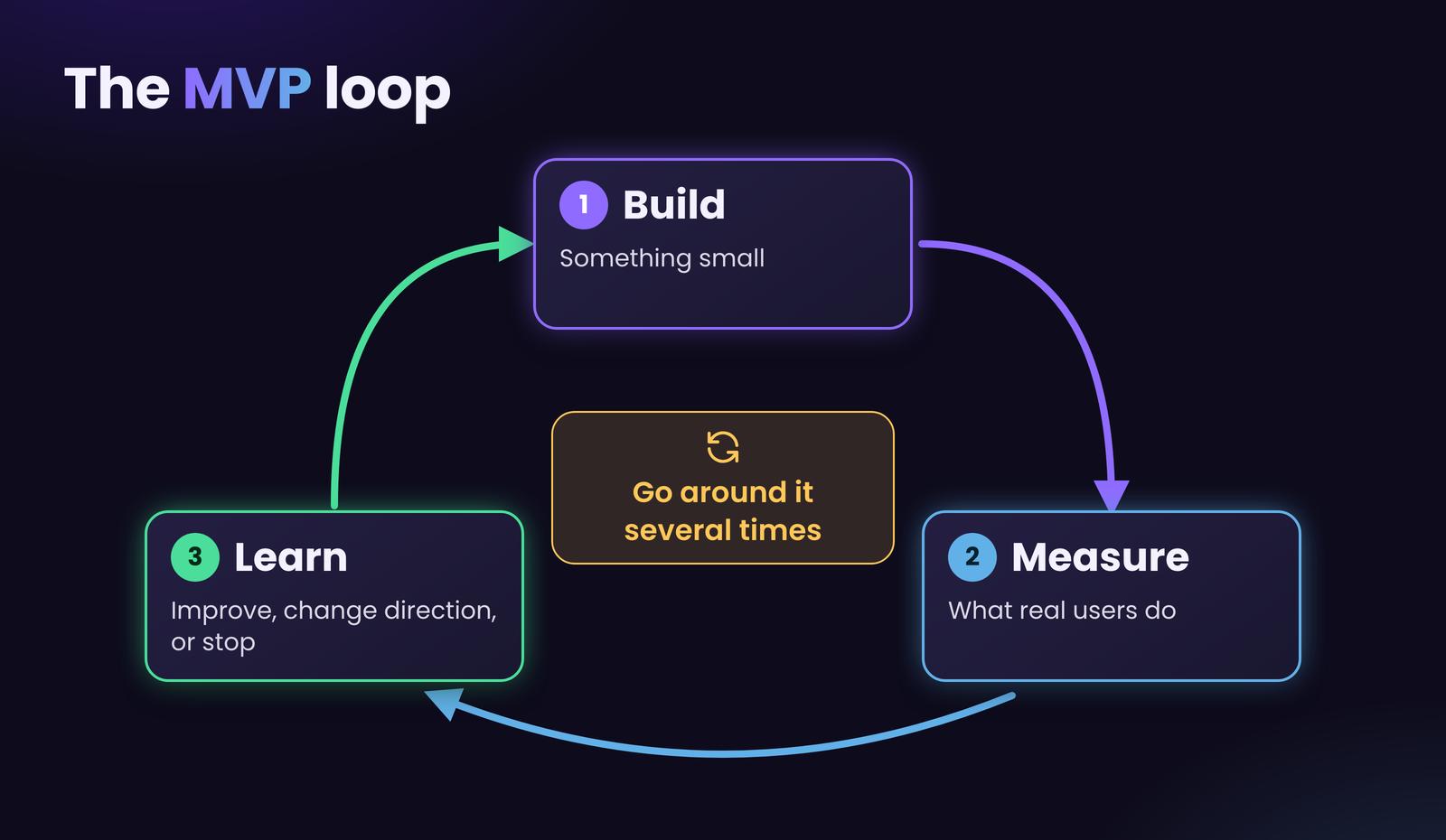
- Launch to a small group, measure and decide. Put it in front of a small number of real users. Decide in advance what success looks like (for example, 20 sign-ups or 5 people paying). Then either improve it, change direction or stop, based on the evidence.
This cycle of building something small, measuring what happens and learning from it is the heart of the Lean Startup method. Most successful products go around it several times.
What to include in your MVP (and what to leave out)#
A good MVP includes the one core workflow that delivers your promised value, plus the basics people need to use it safely. A simple test helps: if removing a feature would stop a customer from getting the main benefit, keep it. Otherwise, it waits.
| Usually include | Usually leave for later |
|---|---|
| The one core feature that solves the main problem | Secondary features and "nice-to-have" extras |
| Simple sign-up and login, if users need accounts | Advanced settings and customisation |
| A clear, simple screen design that is easy to follow | Elaborate branding and animations |
| A way to take payment, if payment is what you are testing | Multiple payment methods and currencies |
| Basic security and data protection | Native apps for every device |
| A way to collect feedback and see usage | Complex reports and dashboards |
Two important notes. First, "leave out" does not mean "ignore". Security, reliability and data protection are never optional, even in a small product. Second, simple does not mean sloppy. The design should still be clear enough that a first-time user can finish the main task without help.
How much does an MVP cost in 2027?#
Our estimates put a simple MVP at about $5,000 to $10,000, a medium one at about $10,000 to $20,000 and a complex or AI-heavy one at about $20,000 to $30,000 or more. The range is wide because "an MVP" can mean anything from a landing page to a full platform, so the honest answer always starts with "it depends on what you are testing."
| MVP complexity | What it usually looks like | Typical cost (USD) |
|---|---|---|
| Simple | One core workflow, one platform, few integrations | About $5,000 to $10,000 |
| Medium | Several user roles, payments or a few integrations | About $10,000 to $20,000 |
| Complex or AI-native | Advanced logic, data pipelines, AI features, compliance needs | About $20,000 to $30,000+ |
These are our estimates, not quotes. Where you land depends on features, integrations and how much of the list we can cut together, and you get a clear price once the scope is written. The same bands are on our MVP development page.
Want a number for your own idea? Our MVP and app cost calculator gives you a ballpark from our team in under a minute, with no email needed.
What drives the price#
- Number and complexity of features. Each extra feature adds design, building and testing time.
- Platforms. One web app costs less than separate iOS, Android and web versions.
- Integrations. Connecting payments, maps, email or other systems adds work.
- Design depth. A clean, simple design costs less than a heavily custom one.
- AI features. They add build cost and can also add ongoing running costs.
- Team model. A freelancer, a small studio and a large agency price very differently.
Costs founders often forget#
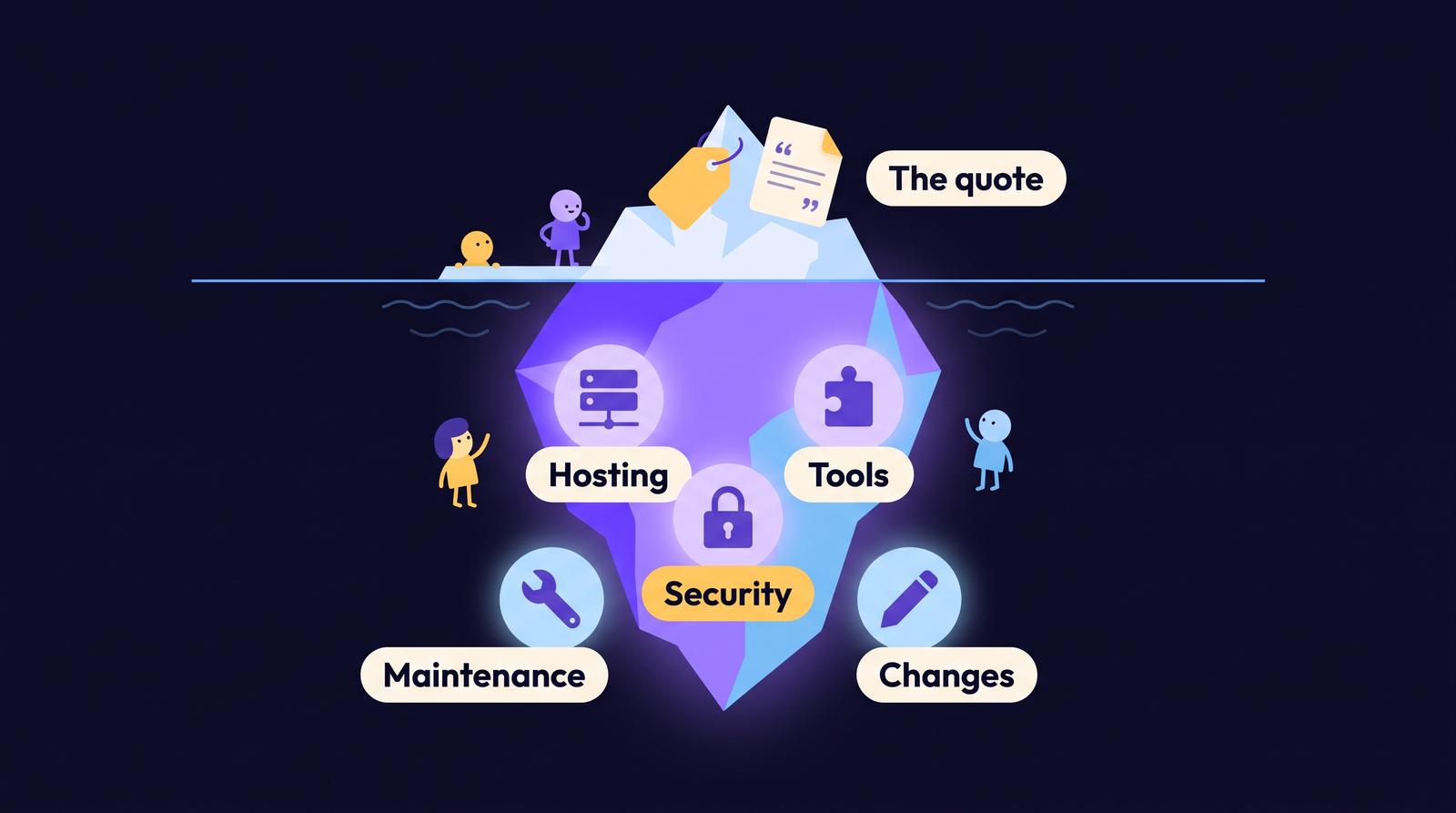
The quote is rarely the whole bill. Hidden costs such as hosting, third-party tools, security, maintenance and changes can add a meaningful amount on top of the build. Ask any partner what happens after launch and what it costs to keep the product running.
How to keep the cost down without cutting corners#
- Fix your feature list before asking for quotes, so every quote covers the same thing.
- Start with the cheapest MVP type that answers your question.
- Choose a small team that works in parallel and keeps meetings to a minimum.
- Look for fixed prices and no lock-in contracts, so you can stop if the evidence says stop.
This is why we offer the Pilot Sprint: a fixed-price $399 starter project that delivers something working in about six working days. It is a low-risk way to test an idea or to try working with us, before any larger commitment.
How long does it take to build an MVP?#
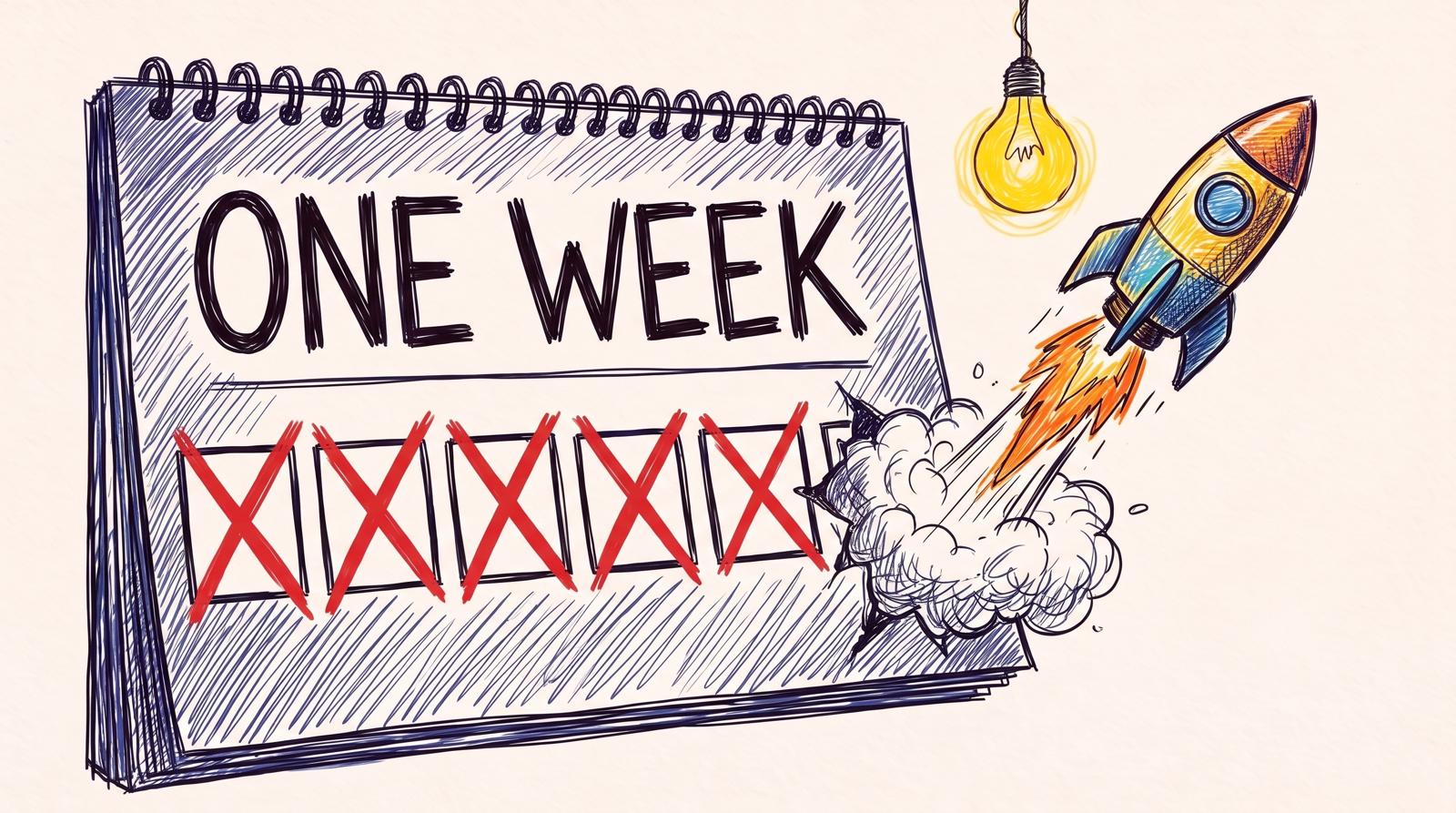
A simple MVP typically takes 4 to 8 weeks, a standard one 8 to 16 weeks and a complex or AI-enabled one 16 to 24 weeks or more. Some very small, focused builds are faster and we deliver a first working version in about six working days through our Pilot Sprint.
| MVP complexity | Typical timeline |
|---|---|
| Simple, single platform | 4 to 8 weeks |
| Standard, more features or platforms | 8 to 16 weeks |
| Complex, AI- or data-heavy | 16 to 24+ weeks |
Where the time goes#
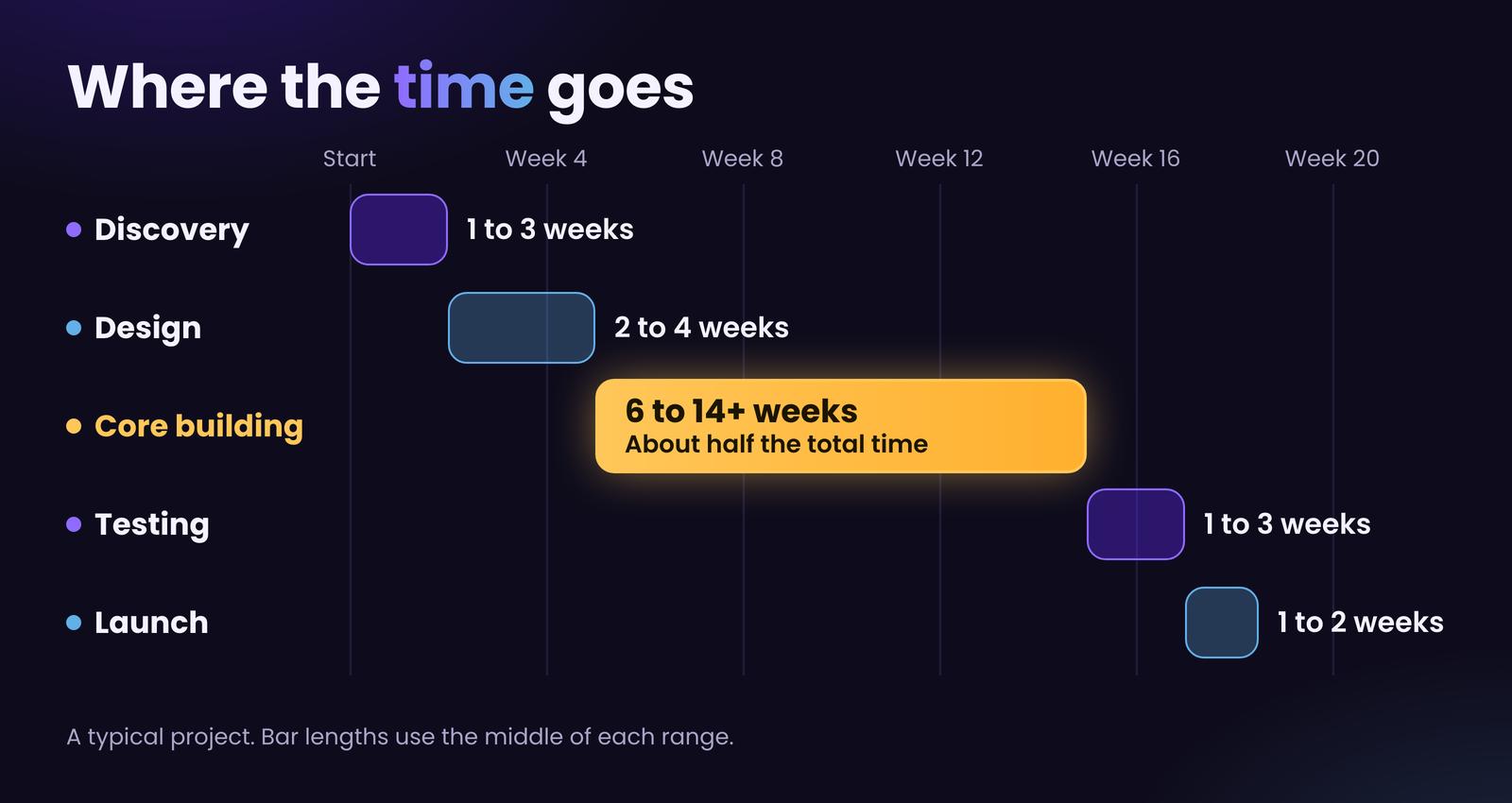
A typical agency-style project spreads across five phases:
- Discovery (1 to 3 weeks). Agreeing what to build and what to skip.
- Design (2 to 4 weeks). Planning how it looks and flows.
- Core building (6 to 14+ weeks). The longest phase and about half of the total time.
- Testing (1 to 3 weeks). Finding and fixing problems.
- Launch (1 to 2 weeks). Going live and handing over.
Is AI making MVPs faster?#
Yes, in moderation. In one controlled experiment, developers with an AI pair programmer completed a task 55.8% faster than those without, though that was a single, well-defined task and real projects vary. But faster typing does not remove the need for good decisions, careful testing and security checks. The time saved is best spent on those, not skipped.
What slows an MVP down#
- Changing the feature list halfway through.
- Slow feedback or approvals from the founder.
- Trying to launch on every platform at once.
- Unclear goals, so no one knows when it is "done".
A team that works asynchronously, with quick forms or WhatsApp questions instead of long meetings, keeps the founder's calendar free and the project moving.
8 common MVP mistakes (and how to avoid them)#
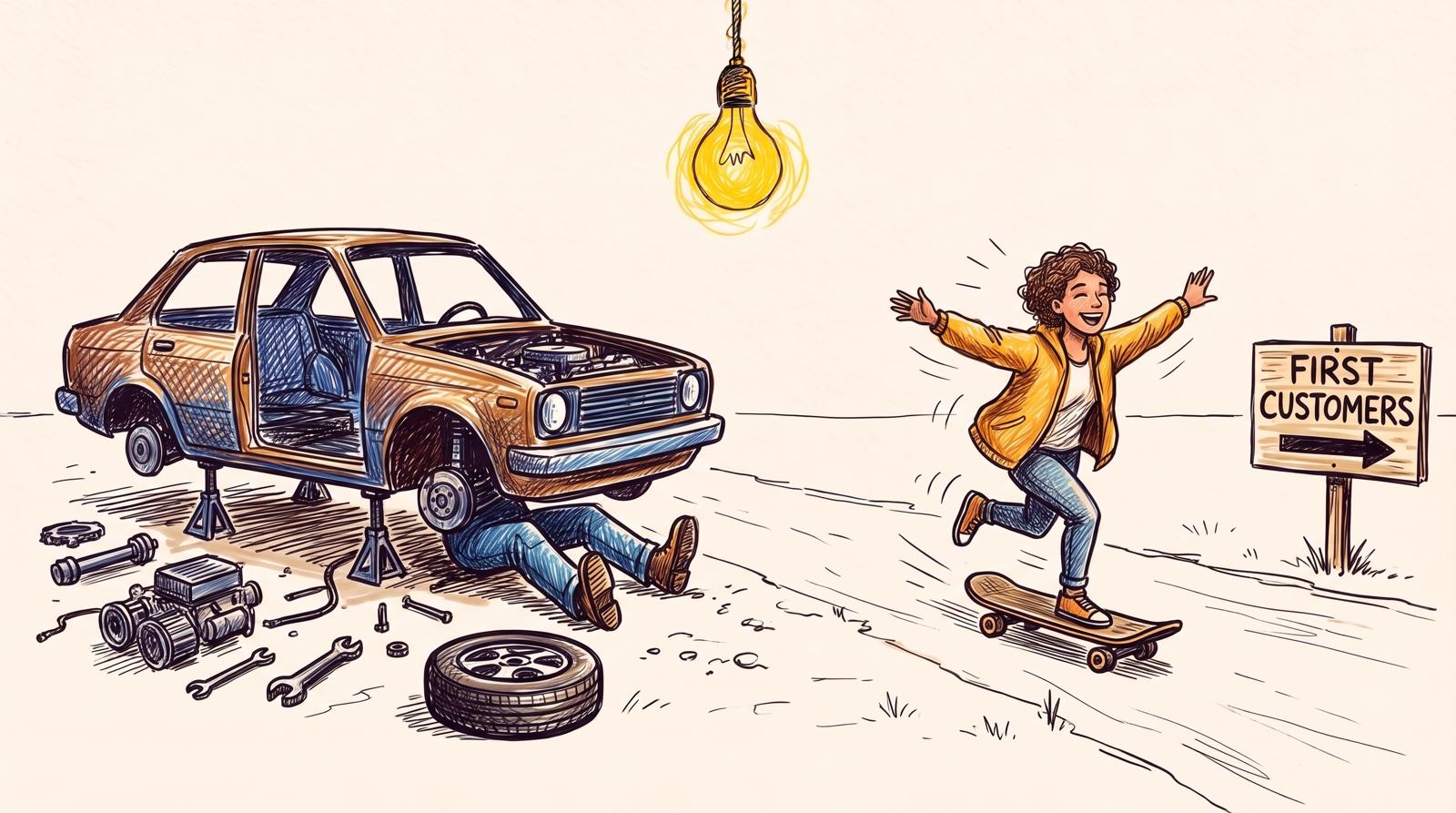
The most common MVP mistake is building too much, because it delays the learning that an MVP exists to provide. Here are the most common mistakes and the fix for each.

Forty features in. The customer wanted to open a bottle.
- Building before talking to customers. Fix: speak to at least ten potential users first and ask about what they do today.
- Packing in too many features. Fix: choose one core workflow and defer everything else.
- Treating the MVP as a rough draft. Fix: keep it small, but make sure it works, is secure and is easy to use.
- Having no success measure. Fix: decide before launch what number would tell you to continue, change or stop.
- Targeting everyone. Fix: start with one small, specific group of users.
- Ignoring feedback or over-reacting to it. Fix: look for patterns across many users, not one loud opinion.
- Choosing a partner by price alone. Fix: pick a team that challenges your scope and explains trade-offs in plain language.
- Skipping the plan for after launch. Fix: know who hosts, maintains and updates the product and what it costs.
Should you use an AI app builder or hire a team?#
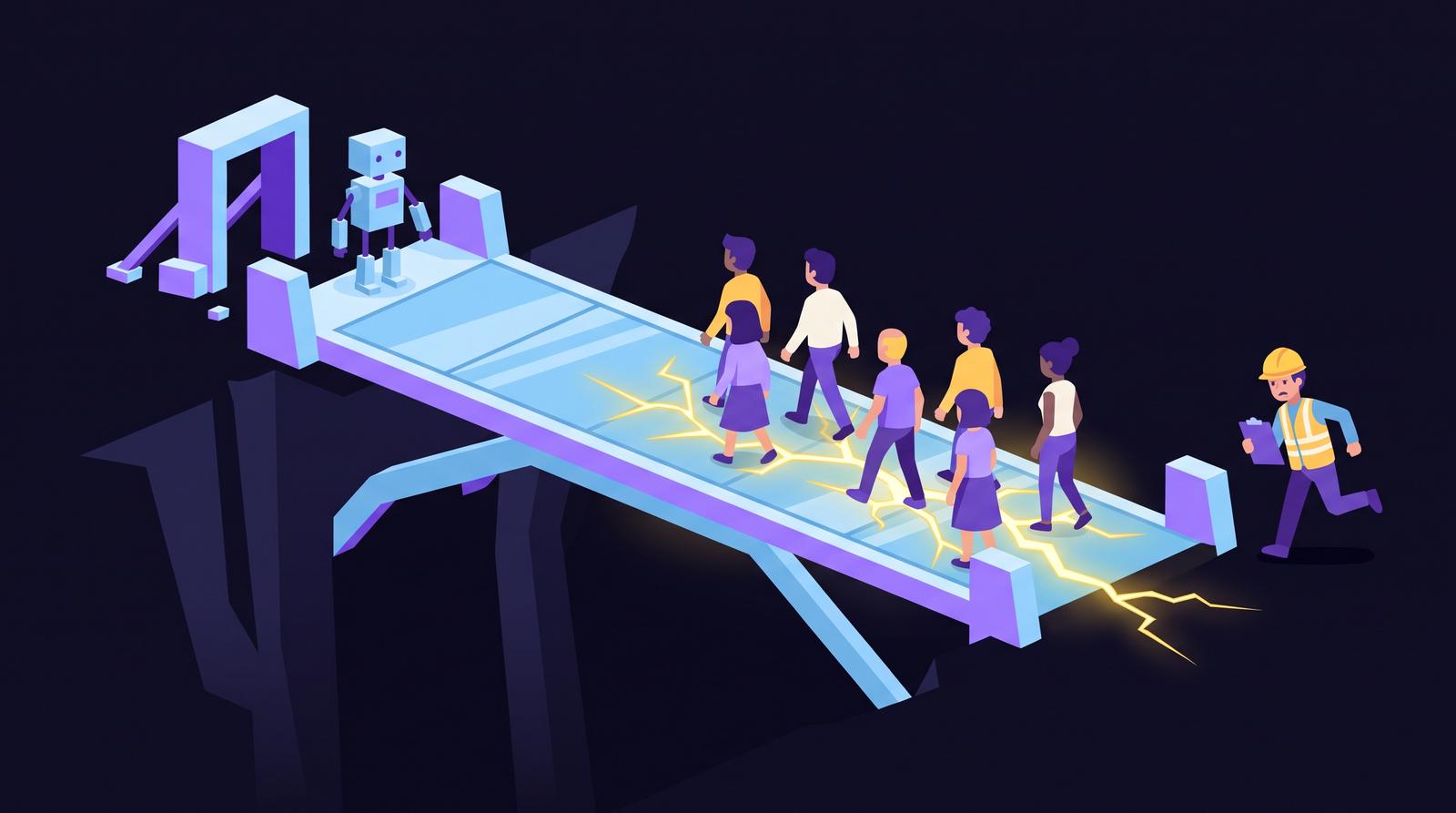
AI app builders are a good way to test an idea quickly, but they leave one question open: who is responsible when something goes wrong? Tools like Lovable, Bolt and Replit can turn a prompt into a working prototype in a day. That is genuinely useful for early experiments.
The trouble usually starts once real users arrive. Security gaps, data errors and scaling limits tend to show up then and nobody is accountable for fixing them. Anyone can prompt an app into existence. Knowing when it is wrong is the hard part.
| Option | Best for | Watch out for |
|---|---|---|
| DIY with AI app builders | Quick, low-cost tests of an idea | No one checks security, correctness or scale |
| Solo freelancer | Small, well-defined tasks | One person handles everything in a single queue and you end up managing them |
| Large agency | Big budgets and large accounts | Higher minimum budgets, more meetings, less direct access |
| Small product studio | Founders without a product team | Check that the team is accountable and that you can talk to the people building it |
The SprintCode view is that a sensible path for many non-technical founders is to use AI tools to explore the idea, then bring in experts to build and check the version real customers will use. That is how we work too. We use the same AI tools everyone has and our value is the people who review the result and stand behind what ships.
Lovable vs traditional coding: which is faster for validating a startup idea before hiring engineers?#
Lovable is faster. You can have something to show people in a day or two, while a traditional build takes weeks to months and costs far more, before you count the weeks of recruiting. Validation does not always need code at all: a landing page, a concierge test or a single-feature version can answer the same question. What you want to avoid is paying for engineers before you know anyone wants the product, and also launching an AI-built prototype to real customers with nobody accountable for it. The middle path is a short, fixed-price build by a team. Our $399 Pilot Sprint delivers a working feature or prototype in about 6 working days, so you can put it in front of real users, learn what they use, and only then decide whether to hire engineers or keep building with us.
How SprintCode Labs builds MVPs for non-technical founders#
SprintCode Labs is a product development studio, so you hand us a business problem and we hand back working software plus the judgment around it: what to build first, what to skip and what will break later. Since 2018 we have delivered 43+ projects for clients in 9 countries, building custom web applications, MVPs and data and AI platforms.
Here is what working with us looks like:
- Business first, then code. We build the most cost-effective option with the fastest time to market, not the biggest build we could sell.
- Freelancer-level cost, team-level speed. A team works in parallel, instead of one person working through a single queue.
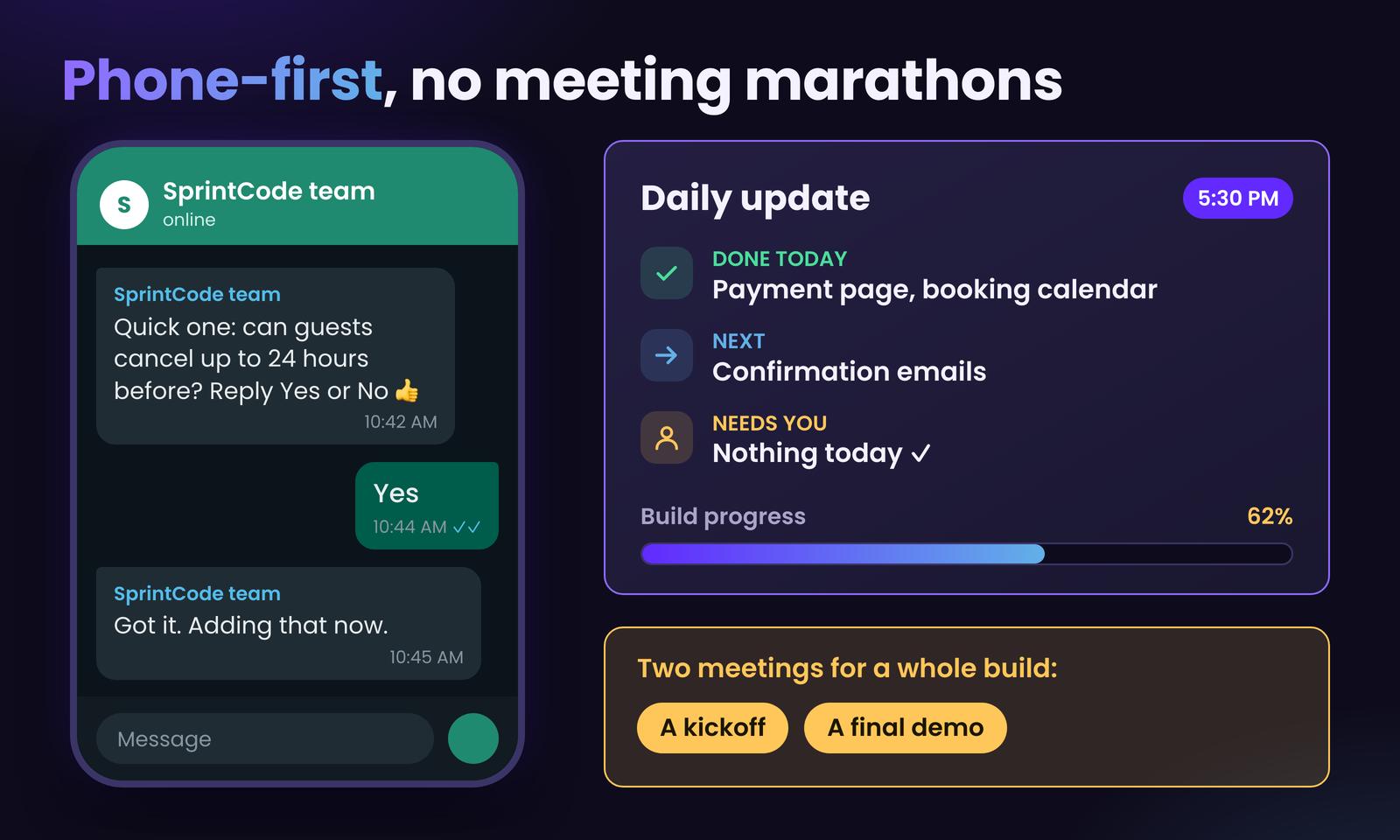
- A team that manages itself. Bugs are found, fixed, tested and shipped inside the team. You get daily updates and a live progress board and we only ask for your input when it really matters.
- Phone-first and async. Questions reach you as a quick form or a WhatsApp message, with no meetings that take over your calendar. One of our biggest e-commerce builds took just two meetings: a kickoff and a final demo.
- AI plus experts. We use the AI tools everyone has and our people check the output and stand behind what ships.
- No lock-in contracts. You can stop whenever the evidence says to.
- Written scope, senior review, free fixes. In our projects, we agree what gets built in writing before any code, a senior engineer reviews every change, and we fix bugs for free for 30 days after delivery.
Start with a Pilot Sprint#
The Pilot Sprint is our entry offer: a fixed price of $399, with something working delivered in about 6 working days. It is a low-risk way to turn your idea into something real or to try working with us, before committing to a full build.
Who we are a good fit for#
We work best with non-technical founders who have a live product or a clear idea and no in-house product team. We also build websites, e-commerce and content for small and medium businesses in Sri Lanka. We are not the right pick if you only need to test interest, because a landing page will tell you more for far less, or if you want weekly meetings or a large in-house-style team.
Frequently asked questions about MVPs#
What does MVP stand for in business, and what does it mean in coding and software development?#
MVP stands for minimum viable product, in business and in coding alike. It is the simplest working version of a product, with one core flow, sign-up and basic security, that lets you test an idea with real users. Developers use it to decide what to build first and what to leave for later. (In sports, MVP means "most valuable player", which is a different thing.)
What is an MVP in simple terms?#
An MVP is a small, working first version of your product that solves one real problem. You release it to a few real users to learn whether people want it, before you invest in the full version.
Is an MVP the same as a prototype?#
No. A prototype is usually a mock-up that shows how a product might look and feel and it often doesn't really work. An MVP is a working product that real people use, so it tests real demand and not just design.
Do I need to know how to code to build an MVP?#
No. You need a clear understanding of the problem and your customer and a technical partner you can trust to handle the building. Your job is to decide what matters most and a good team will translate that into software and explain choices in plain language.
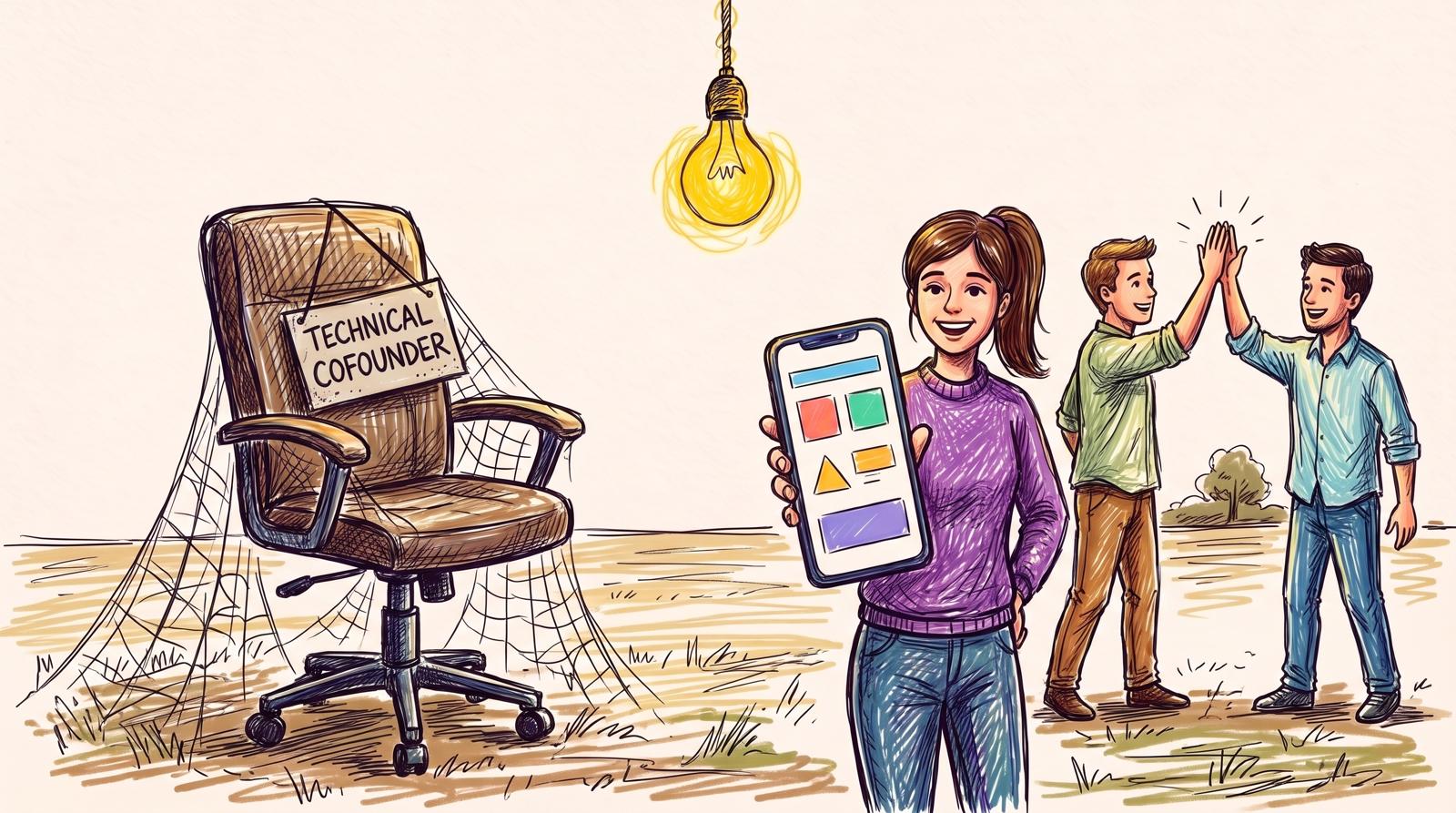
Do I need a technical co-founder?#
Not necessarily. Many non-technical founders work with a development studio or a small team instead of a co-founder. What matters is that someone technical is accountable for the quality of what is built.
How much does it cost to build an MVP?#
Our estimates run from about $5,000 to $10,000 for a simple MVP to about $20,000 to $30,000 or more for a complex or AI-heavy one. Landing-page and manual MVPs can cost far less. At SprintCode Labs, our fixed-price Pilot Sprint starts at $399.
How long does it take to build an MVP?#
Simple MVPs usually take 4 to 8 weeks, standard ones 8 to 16 weeks and complex ones 16 to 24 weeks or more. Our Pilot Sprint delivers something working in about 6 working days.
How many features should an MVP have?#
As few as possible. Aim for one core feature or workflow that delivers the main benefit, plus the basics such as sign-up and security. If a feature is not needed to test your main assumption, leave it for later.
Should my MVP be a website, a web app or a mobile app?#
The SprintCode view is that, for most founders, a web app or website is the best first step, because it works on any device and is quicker to build. Separate native iPhone and Android apps usually take longer and cost more than a single-platform build. Build mobile apps once you have proof that people want the product.
Can I build an MVP with AI tools or no-code?#
Yes, for early experiments. AI app builders and no-code tools can produce a working prototype fast and cheaply. For a product that real customers will rely on, have experts review security, correctness and scalability before you launch.
Which no-code tools also help with SEO and marketing after you ship?#
No-code website builders such as Webflow, Framer and Wix include built-in SEO settings, like page titles, meta descriptions and sitemaps, which makes them a good fit for a marketing site or landing page. Apps generated by AI app builders are different: many are rendered in the browser, which can make search visibility harder unless the pages are rendered on the server or built ahead of time, for example with Next.js. The practical split is a no-code site for marketing and a properly built app behind it. We build both, from the product to a search-friendly site, so your launch does not stall on discoverability. Start with a $399 Pilot Sprint to see how we work.
Can I build a web or mobile MVP in 5 weeks?#
A simple, single-platform web MVP usually takes 4 to 8 weeks, so 5 weeks fits a small scope with one core workflow. Separate native iPhone and Android apps usually take longer, so a web app that works well on phones is usually the quicker start. If you want something working sooner, our $399 Pilot Sprint delivers one working feature or prototype in about 6 working days.
Is there a SaaS MVP cost calculator?#
Yes. Our MVP and app cost calculator gives a ballpark price and timeline for an app or website in under a minute, with no email needed, so it is a good first check for a SaaS MVP. It is a starting point, not a quote, and it covers the build only, so hosting and outside services are extra. For a written scope and a clear price, book a free call.
Do you offer low-code MVP development services?#
We help you pick the right level for your first version. Low-code and no-code tools are fine for early tests, and if one will answer your question we will tell you so. If you only need to test interest, a landing page will tell you more for far less. When real users will rely on it, we build a custom MVP: a real web app with proper security, designed around one core workflow, built with AI tools and checked by a senior engineer. To see something working first, a $399 Pilot Sprint delivers one working feature or prototype in about 6 working days. See our MVP development services.
How do I know if my MVP is working?#
Decide on your success measure before you launch. Good signals include people signing up, coming back to use it again, completing the main task or paying. Compare the results with the number you set in advance, so you are not tempted to explain away weak results.
What happens after the MVP is launched?#
You study what users do, talk to them and decide whether to improve, change direction or stop. If it works, the MVP becomes the base for version one of the full product. Expect further build time to turn a single-feature MVP into a sellable first version, though the amount varies by product.
Is an MVP the final product?#
No. An MVP is the first step of a learning process. It is built to be improved, extended or even changed completely based on what real users show you.
What is the biggest mistake first-time founders make with MVPs?#
Building too much before testing anything. A long, expensive first build delays the learning and the market can tell you the idea needs to change only after you have spent the money.
Ready to turn your idea into a working MVP?#
Tell us what you want to build and we will tell you honestly what to build first, what to skip and how long it should take. You do not need a spec, a technical background or a free week for meetings.
Start your Pilot Sprint: a fixed price of $399, with something working in about 6 working days and no lock-in contracts.
Prefer a quick chat first? Call us on +94 72 0800 275 or email us at sachintha@sprintcodelabs.com
Written by the SprintCode Labs team, a senior product team that builds MVPs and custom software for founders.