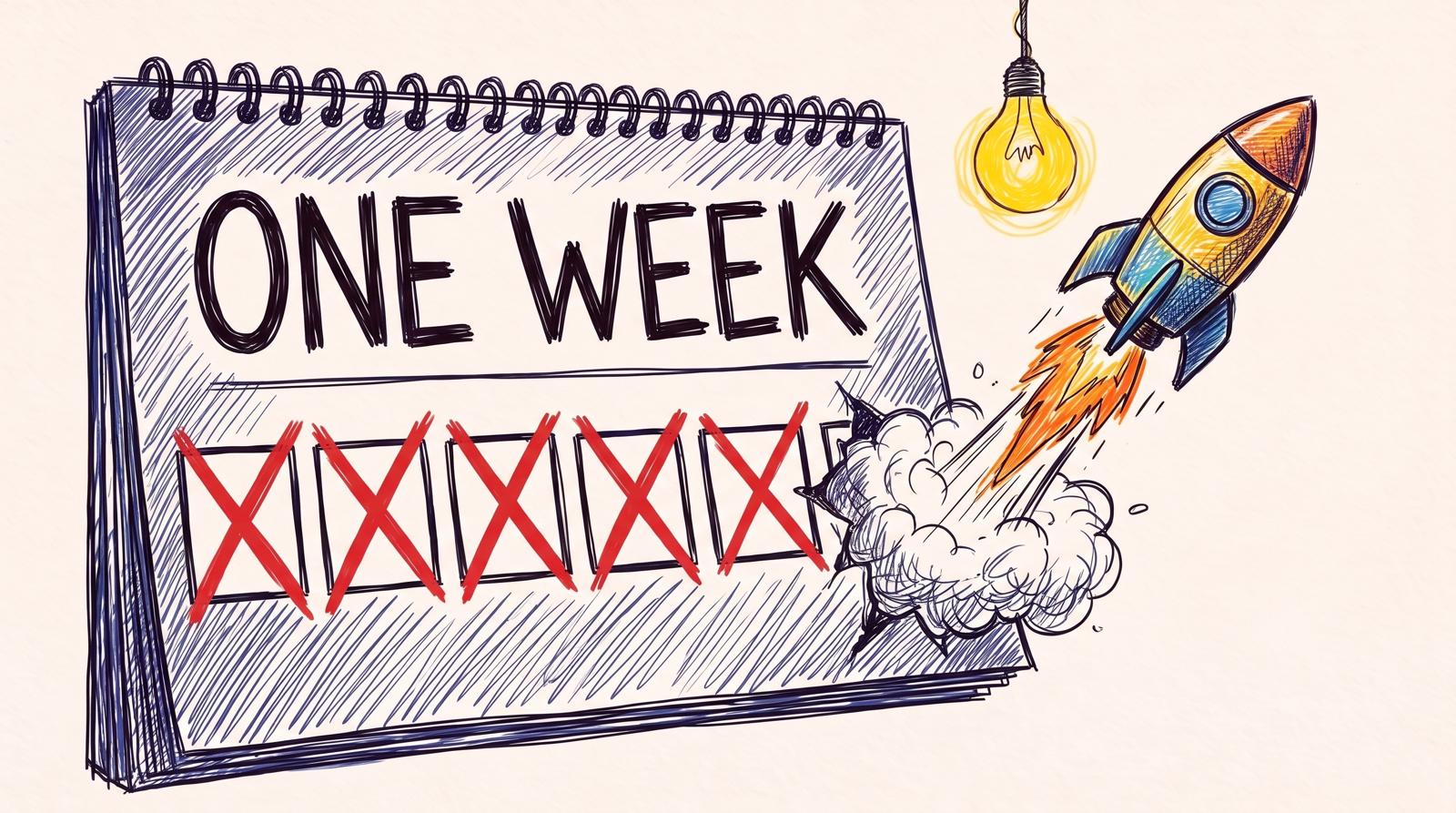
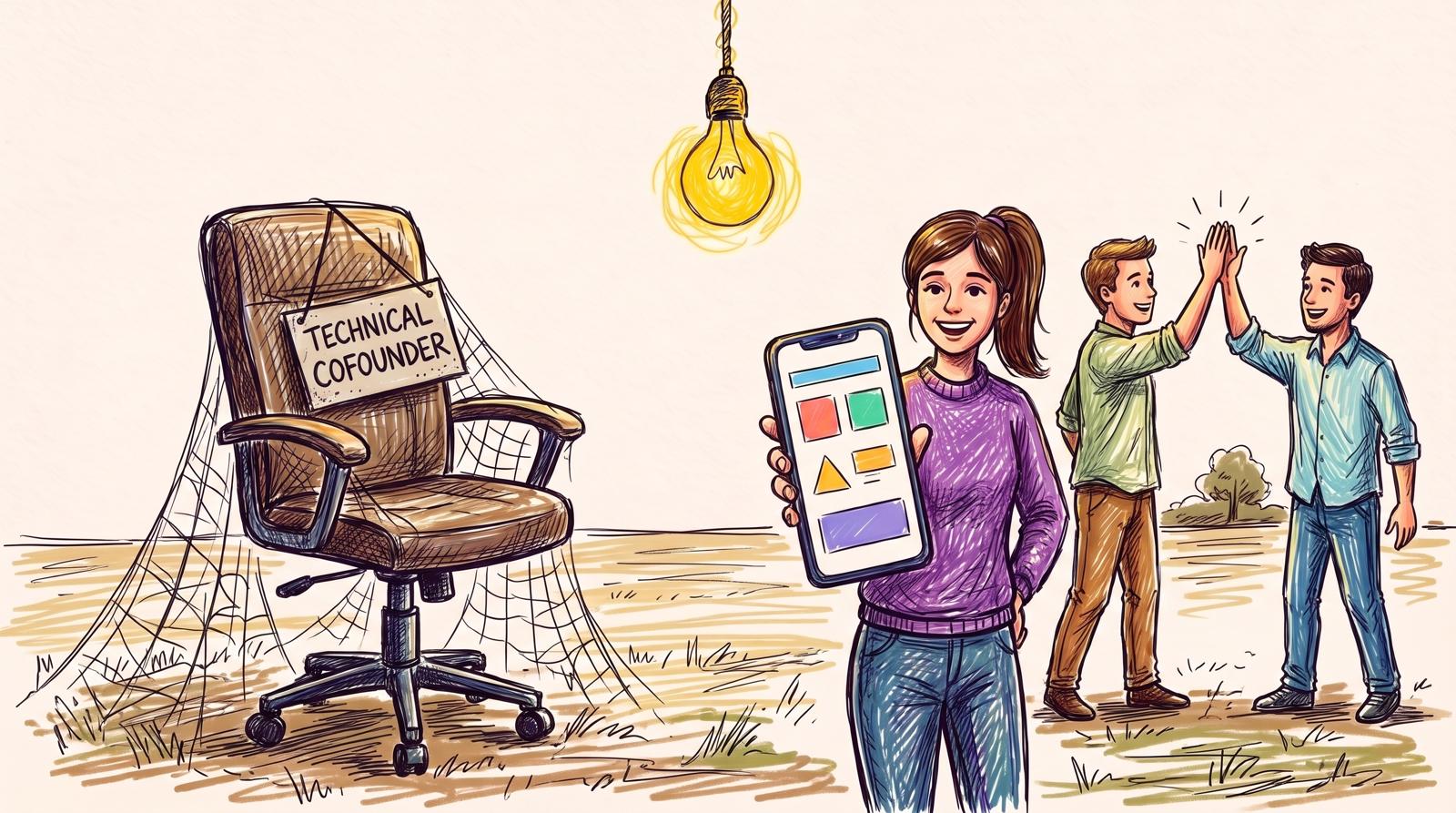
You can build an app without a technical cofounder. The fastest, lowest-risk route is to start with a small MVP built by a development partner who handles the technical decisions for you, rather than waiting to find a cofounder or learning to code.
In this guide#
- Can you build an app without a technical cofounder?
- Your options compared
- How to build an MVP without a technical cofounder: 7 steps
- How to choose a development partner for a non-technical founder
- MVP development for non-technical founders at SprintCode Labs
- FAQs
Can you build an app without a technical cofounder?#
Yes. Many founders with no technical cofounder build and launch a working product by pairing a clear business problem with a development partner who owns the technical side. You don't need to write code. You need to know who your users are, what problem you're solving, and what the smallest useful version looks like.
A technical cofounder is one way to get a product built. It is not the only way, and it is often the slowest. Finding the right person can take months, and an equity split is hard to undo if the match is wrong.
Why "no technical cofounder" is a solvable problem#
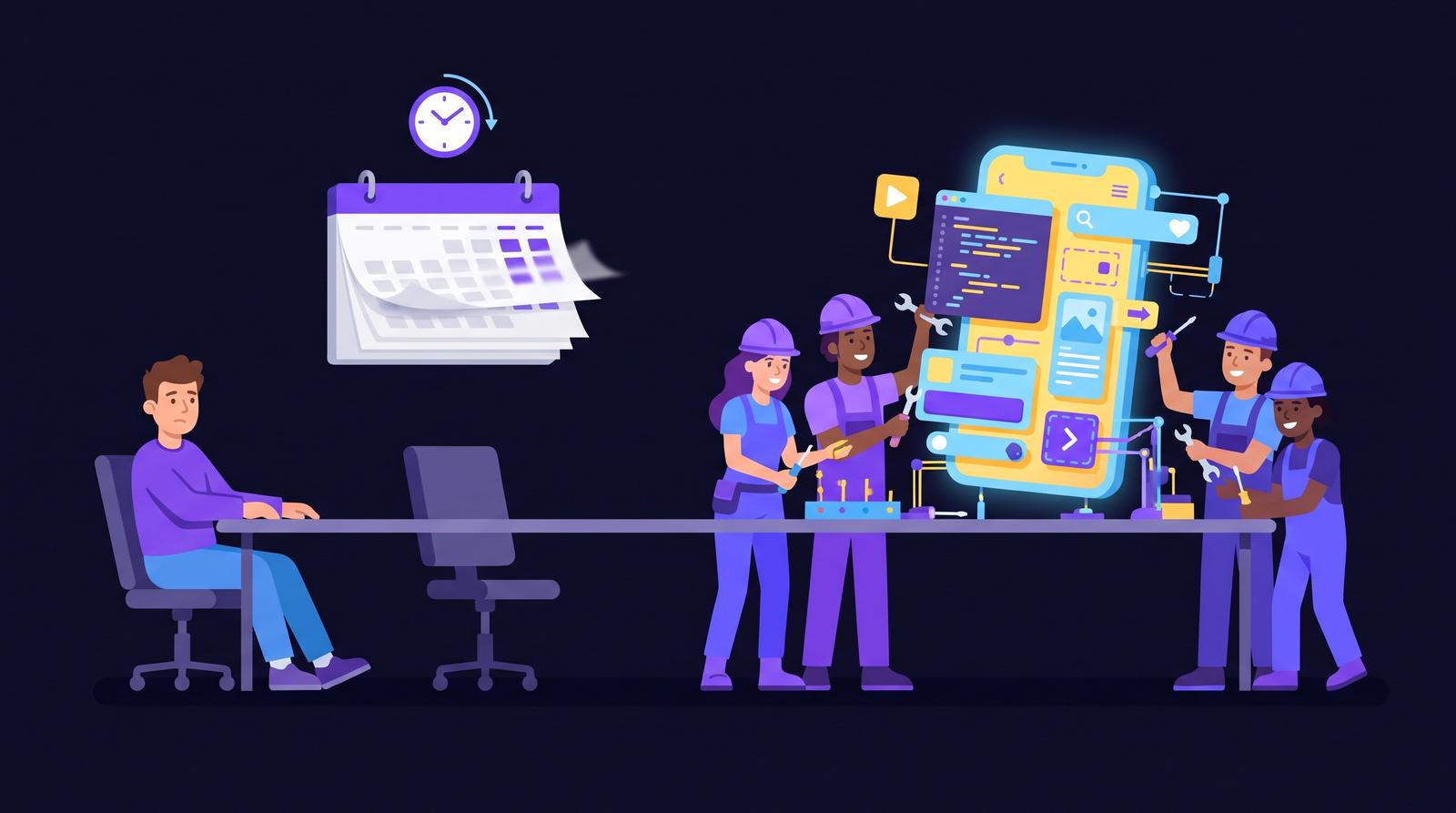
- You can rent expertise instead of giving up equity. A development partner brings design, backend and QA skills for a fixed scope and price.
- AI tools have lowered the cost of building. Tools like Claude Code, Cursor and Codex speed up delivery, but someone still has to know when the output is wrong.
- An MVP is small by design. An MVP, or minimum viable product, is the first version of your app. It only has to prove one thing: that people want what you're building. Eric Ries, who popularised the term, described it as the version that gathers "the maximum amount of validated learning about customers with the least effort".
If you're a non-technical founder looking for software development, the real question is not "how do I find a cofounder?" It is "what is the cheapest, fastest way to put something real in front of customers?"
Your options compared#
If you have no technical cofounder, you have five realistic ways to get an app built. The SprintCode view is that a development partner usually gives the best balance of cost, speed and accountability for an early-stage founder.
| Option | Best for | Main risk | Who manages the work? |
|---|---|---|---|
| Find a technical cofounder | Founders with time and a strong network | Slow search, equity split, mismatch | You and your cofounder |
| Hire a freelancer | Small, well-defined tasks and hands-on expertise at a fair cost | One person means one queue, and you end up managing the work | You |
| Large agency or big studio | Funded companies with large, well-defined projects | Built around bigger builds, with more meetings | Account managers |
| AI app builders (DIY) | Quick prototypes and demos | No one is accountable for security, correctness or scale | You |
| Development partner (product studio) | Non-technical founders who want a working MVP | Needs a partner who is honest about scope | The partner's team |
Large agencies usually have high standards and clean handovers. The trade-off for an early-stage founder is fit, not quality: a big agency is set up for a big build.
Which one fits a non-technical founder?#
Choose a development partner when you have a business problem and a budget, but no one to make technical decisions. A good partner hands back working software plus the judgment around it: what to build first, what to skip, and what will break later.
Want a quick read on which route fits you? Book a free chat with our founder. It's a free 30-minute call, and we'll tell you honestly whether you need a partner, a freelancer or just a simpler plan.
How to build an MVP without a technical cofounder: 7 steps#
To build an MVP without a technical cofounder, define the one problem you solve, cut the feature list to a single core flow, and hand the build to a team that works in short, visible sprints. Here is the process, step by step.
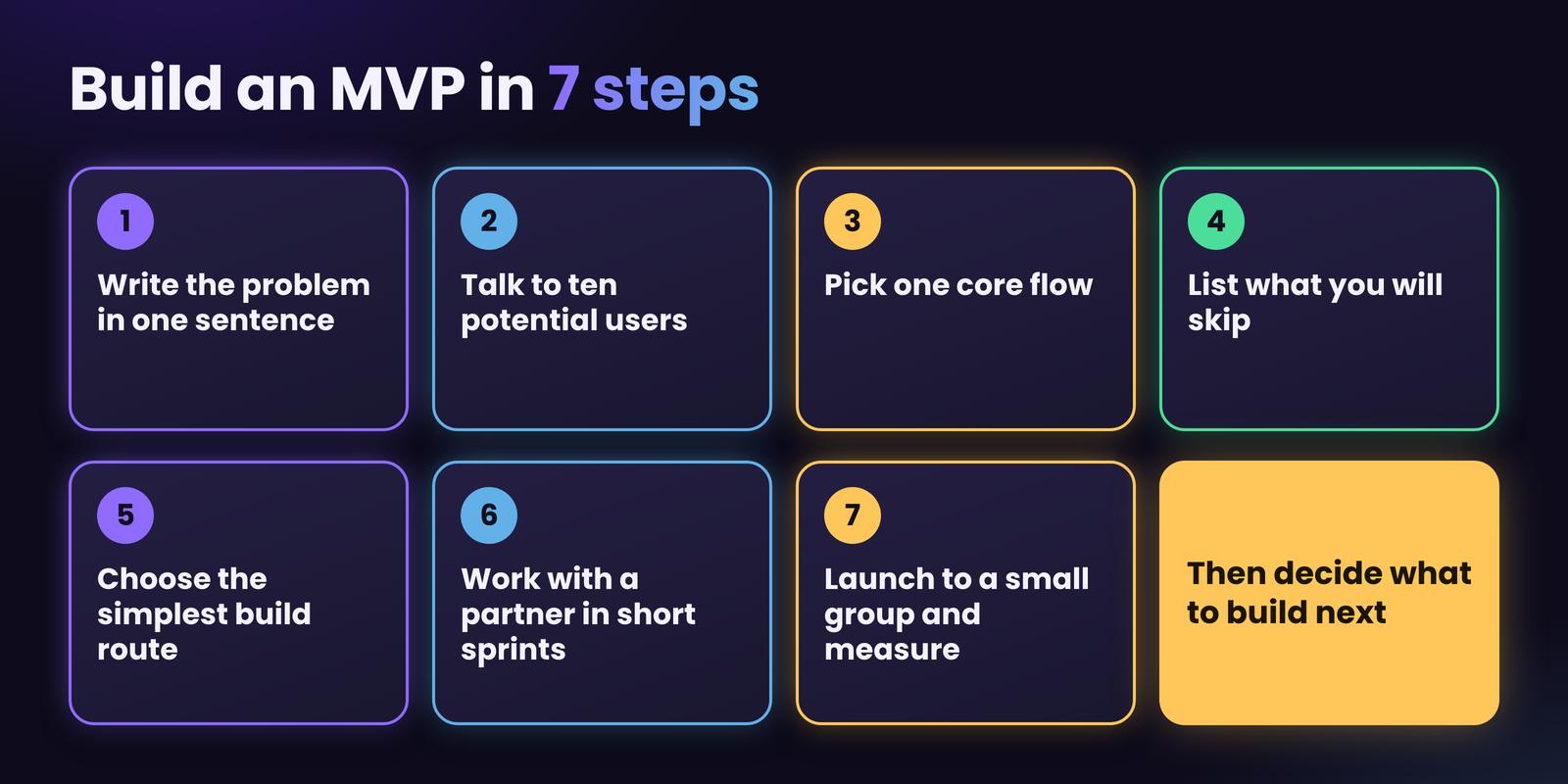
- Write the problem in one sentence. Who has the problem, what is it, and what do they do about it today? If you can't say it in one sentence, the build will drift.
- Talk to ten potential users. Before spending anything, confirm that people care. Notes from real conversations are worth more than a long spec.
- Pick one core flow. An MVP is not a smaller version of your full vision. It is the one path a user takes to get value, for example: sign up, do the main thing, see the result.
- List what you will skip. Write down every feature you are deliberately leaving out of version one. This list protects your budget and your timeline.
- Choose the simplest build route. For many ideas, a focused custom build or a well-configured existing platform is enough. Pick the most cost-effective option that gets you to market fastest, not the biggest build.
- Work with a partner in short sprints. Ask for something working within days, not a big reveal after months. Look for daily updates and a live progress board so you always know where things stand.
- Launch to a small group and measure. Put the MVP in front of your first users, watch what they do, and use that to decide what to build next.
What an MVP should cost you in time and attention#
A good build process should not take over your calendar. The best partners ask for your input only when it matters, using quick forms or messages instead of recurring meetings. If a team wants a weekly meeting marathon for a small MVP, that is a warning sign.
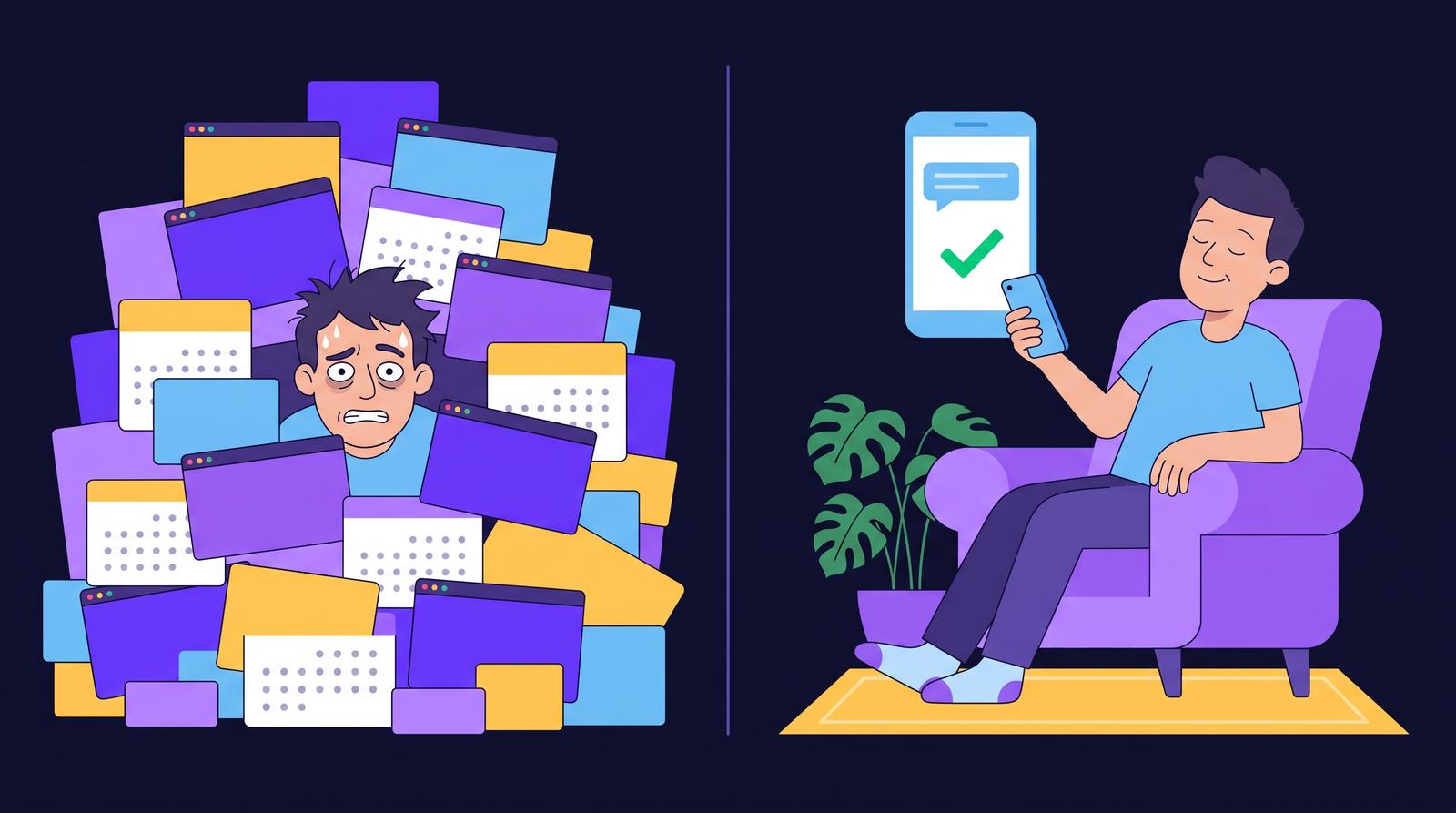
In our projects, steps 4 to 6 look like this: we agree what gets built and what does not in a written scope before any code, you follow a live board with a written update every working day, a senior engineer reviews every change, and we fix bugs for free for 30 days after delivery. That is also what we would ask any partner to show you.
Ready to turn these steps into a real product? Start with a Pilot Sprint: a $399 fixed-price starting point that delivers a working feature or prototype in about 6 working days.
How to choose a development partner for a non-technical founder#
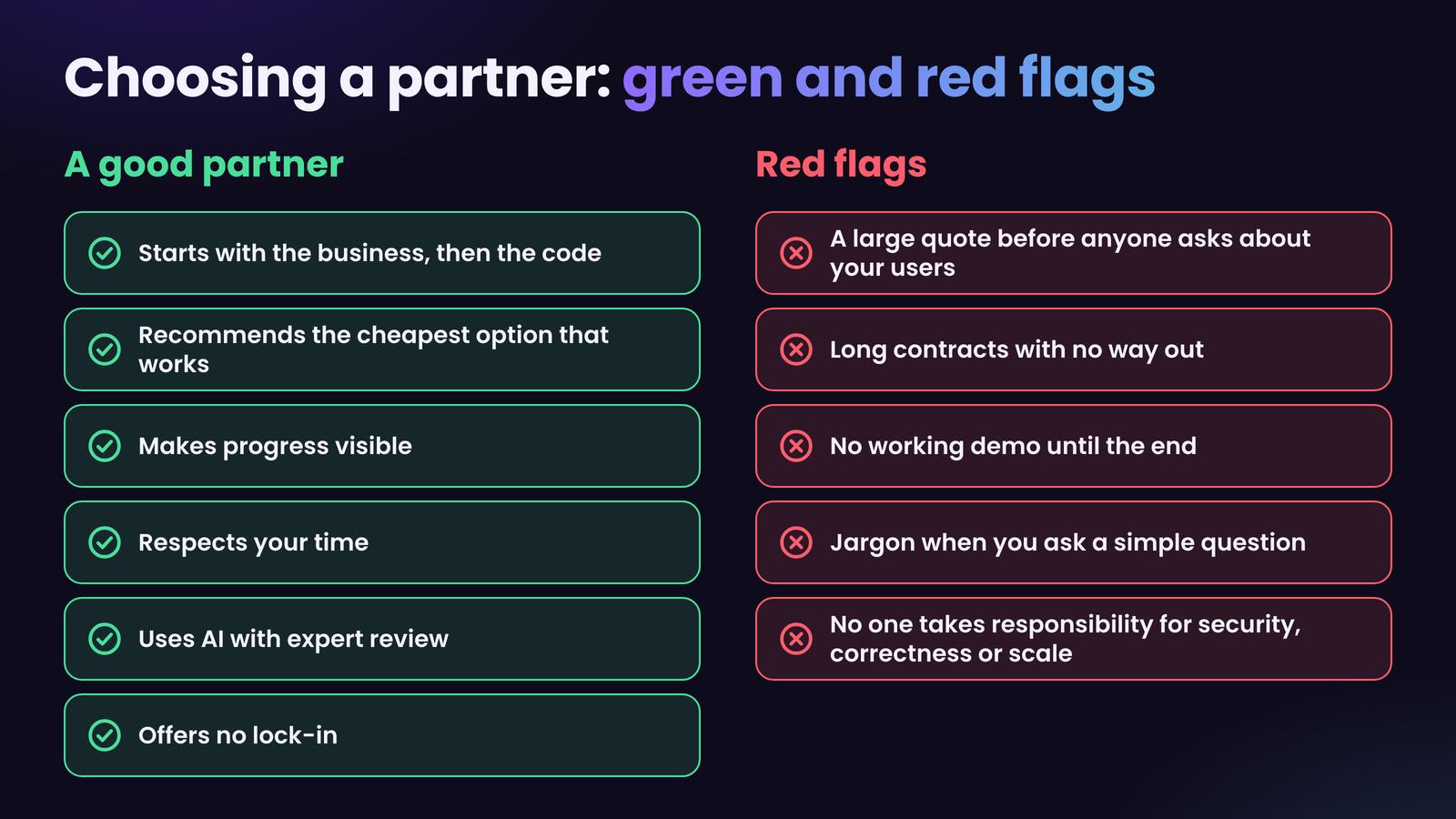
The right development partner for a non-technical founder starts with your business problem, not with a list of technologies. They should tell you what to build first, what to skip, and what could break later, in plain language.
What a good partner does#
- Starts with the business, then the code. They ask about customers, revenue and timing before they talk about frameworks.
- Recommends the cheapest option that works. They suggest the most cost-effective route to market, even if it means selling you less.
- Makes progress visible. You get daily updates and a live board, not silence followed by a demo.
- Respects your time. Questions arrive as a short form or a WhatsApp message, not a calendar full of meetings.
- Uses AI with expert review. AI tools speed up the work, and experienced people check the result and stand behind what ships.
- Offers no lock-in. You can leave without a penalty if it isn't working.
Red flags to watch for#
- A large quote before anyone has asked about your users
- Long contracts with no way out
- No working demo until the end of the project
- Jargon-heavy answers when you ask a simple question
- No one who will take responsibility for security, correctness or scale
Questions to ask before you sign#
- What would you build first, and what would you leave out?
- How soon will I see something working?
- How often will you need me on a call?
- Who checks the AI-written code?
- What happens after launch: hosting, fixes and updates?
Not sure what to ask for? Tell us about your idea and we'll talk it through with you.
MVP development for non-technical founders at SprintCode Labs#
SprintCode Labs is a product development studio that acts as the product team for founders who don't have one. We've been shipping since 2018: 43+ projects delivered, 20+ long-term partners, and clients in 9 countries, including the UK, USA, Canada, Singapore, the Netherlands, France and Sri Lanka.
You bring the business problem. We hand back working software plus the judgment around it. You'll talk to Sachintha, the founder. Not a salesperson. And one delivery lead owns the whole thing.
What you get#
- Freelancer-level cost, team-level speed. A team works in parallel, so you're not waiting in a single queue.
- A team that manages itself. Bugs are found, fixed, tested and shipped inside the team. You get daily updates and a live progress board.
- Phone-first and async. We send quick forms or WhatsApp messages instead of taking over your calendar. One of our biggest e-commerce builds needed just two meetings: a kickoff and a final demo.
- Dynamic teams. Each project gets the specialists it needs, from UI design and backend to data pipelines and AI.
- AI plus experts. We use the same AI tools as everyone else. Our value is the people who know when the AI is wrong and stand behind what ships.
- No lock-in contracts. You stay because the work is good, not because you're stuck.

We are not the right fit for everyone. If you only need to test whether anyone is interested, a landing page or a prototype you build yourself will tell you more for far less. If you want weekly meetings or a large in-house-style team, a different kind of partner will suit you better.
What SprintCode builds#
- Custom web applications and MVPs
- Multi-tenant SaaS products
- Data platforms
- E-commerce stores with design systems and ongoing care
- Booking systems and brand identity
- Hosting, maintenance and care plans for delivered products
Start with the Pilot Sprint#
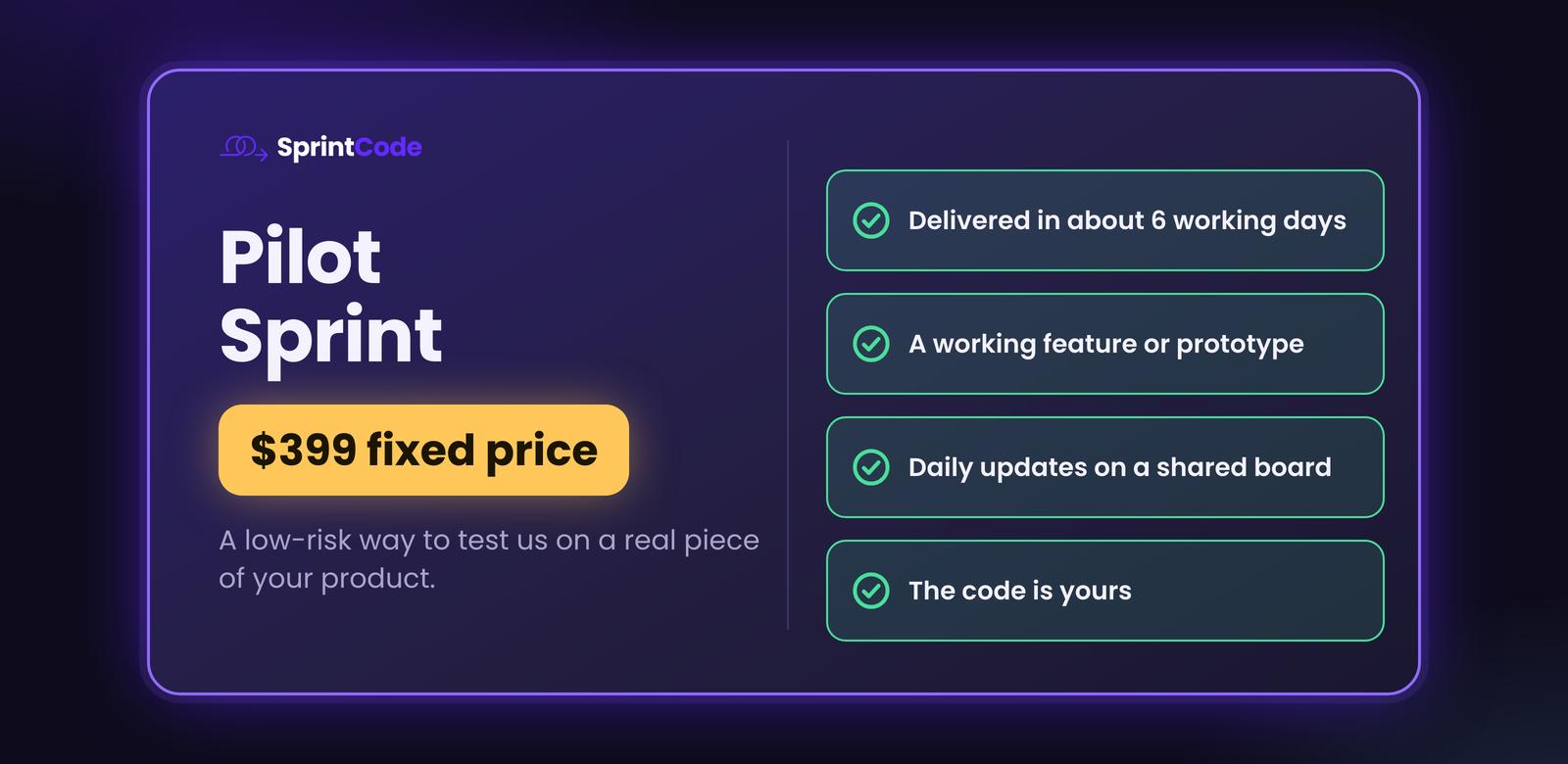
The Pilot Sprint is our entry offer: a $399 fixed price with a working feature or prototype delivered in about 6 working days. It's a low-risk way to test how we work on a real piece of your product before you commit to a larger build.
Ready to build your app without a technical cofounder? Book your Pilot Sprint.
FAQs#
Can I build an app if I'm not technical?#
Yes. A non-technical founder can build an app by defining the problem clearly and working with a development partner who handles design, code and testing. You stay in charge of the business decisions.
Do I need a technical cofounder to build my startup?#
No. A technical cofounder is helpful, but you can build and launch an MVP with a development partner first, then decide later whether to hire in-house or bring on a cofounder once you have users and traction.
What is the best fixed-price development agency for non-technical founders building their first product?#
The SprintCode view is that the best fit is a small team that starts with your business problem, agrees scope, deadline and price in writing before work starts, shows working software early, explains choices in plain language and does not lock you into a long contract. Look for a small, founder-accessible team rather than one built for large accounts, and use the checklist in the section on choosing a partner above. Ask for a small first project. At SprintCode Labs that is a $399 Pilot Sprint, and you talk to the founder. Our guide to fixed price software development explains how it works.
How long does it take to build an MVP?#
It depends on scope. A focused first version can be working in days or weeks, not months. Our Pilot Sprint delivers a working feature or prototype in about 6 working days.
How much does it cost to build an MVP?#
Cost depends on what you build. Keep version one small, and ask for a fixed price. Our entry offer, the Pilot Sprint, is $399 fixed, and it's designed as a low-risk way to try us on a real piece of your product before a larger build.
Can I just use an AI app builder instead?#
AI app builders are fast for prototypes. The trade-off is that nobody is accountable for security, correctness or scale. We use AI tools too, with experts reviewing the result, so what ships is something you can rely on.
Lovable vs traditional coding: which is faster for building an online CV builder?#
Lovable is faster to a working CV builder: a form, a template and a PDF export can appear in hours to days, while traditional coding takes weeks. The catch is that a CV builder stores personal details such as names, contact information and work history, so it needs a developer's check as soon as people create accounts. Someone has to make sure each user can only open their own CV, a check AI tools often miss because the app still looks like it works. If you want the speed without that risk, we build it as a $399 fixed-price Pilot Sprint, with a working first version in about 6 working days and an engineer checking access before real users arrive.
Where should a non-technical founder start with MVP development?#
Start with one sentence that describes the problem, ten conversations with potential users and a single core flow, as in the 7 steps above, and list what you'll skip. Then hand the build to a partner who works in short sprints and shows you working software within days, so you can launch to a small group of users and measure what they do before adding features. Our guide What Is an MVP? explains the terms in plain English.
What happens after my app launches?#
You'll still need hosting, fixes and updates. We offer ongoing hosting, maintenance and care plans for the products we deliver.
Build your app without waiting for a technical cofounder#
You don't need to code, and you don't need to wait for a cofounder to appear. You need a clear problem, a small first version and a partner who takes the technical risk off your plate.
Get started today: Book a Pilot Sprint: $399 fixed price, a working feature or prototype in about 6 working days, no lock-in contracts.
Written by the SprintCode Labs team, a senior product team that builds MVPs and custom software for founders.